Quick Answer
Provide a well-drained route from the house, create at least one stable seating area, add selective shelter from wind and rain, plan safe lighting, use planting with structure across several seasons and include storage for furniture or equipment.
The most successful design starts with how the garden is used in poor weather, not just how it looks on a sunny day.
Start with the route from the house
A garden designed only around warm summer afternoons can become difficult to use for much of the year. Wet paths, poor drainage, exposed seating and a lack of lighting can make the space feel closed from autumn until spring even when the temperatures are relatively mild.
Year-round garden design does not mean building a roof over the entire plot or trying to use it in every weather condition. It means creating routes, surfaces, shelter and planting that remain attractive and practical through changing seasons.
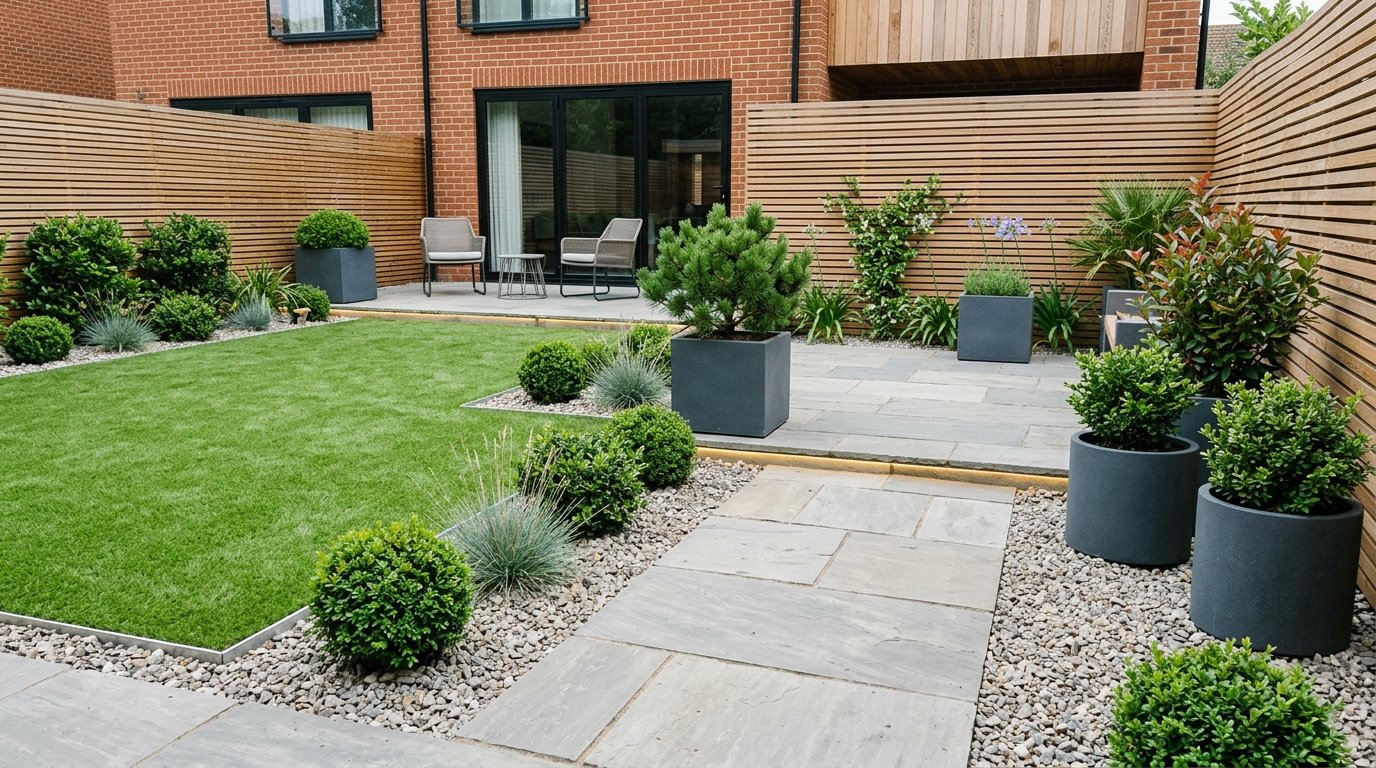
If you step straight from the back door onto muddy lawn, the garden becomes less inviting in winter. Create a clear all-weather path between the house, seating, bins, storage and any garden office.
Choose a surface that suits the expected traffic and drainage. Paving, gravel and decking can all work when correctly detailed.
Keep routes direct. A decorative winding path may look attractive on a plan but can encourage people to cut across wet grass if it makes everyday journeys unnecessarily long.
Create one reliable all-weather seating area
Rather than spreading small seating zones around the whole garden, prioritise one area that stays usable after rain.
A patio or deck near the house is convenient for food and drinks. A more sheltered area further away can work where the garden has better sun or less wind.
If you are comparing construction types, our patio versus decking guide covers maintenance, drainage and level changes.
Solve drainage before adding more features
Waterlogging is one of the main reasons a garden becomes unusable outside summer. Muddy lawns, puddled paving and saturated planting beds limit movement and can damage plants.
The RHS identifies heavy or compacted soils as common causes and recommends understanding the problem before major drainage installation. citeturn982258search0turn982258search4
If drainage is poor, deal with it before installing expensive paving or a garden room. Our guide to garden drainage solutions explains options from soil improvement to rain gardens and designed drains.
Use shelter strategically
Shelter can extend the comfortable seasons, but complete enclosure is not always necessary.
Options can include:
- a pergola with suitable cover
- a veranda or canopy
- a garden room or covered seating structure
- screens positioned against prevailing wind
- hedges and planting that filter wind
The location matters. A roof that blocks low winter sun from the house can create a darker interior, while a screen in the wrong place may trap wind rather than reduce it.
Planning permission and building regulations can apply to some structures depending on size, position, property type and use. Check before treating every garden building as permitted development.
Think about wind, not only rain
A sheltered sunny corner can feel comfortable on a cool day, while an exposed patio may be unpleasant even when dry.
Observe wind direction through different seasons. Existing walls, fences and neighbouring buildings can create turbulence. Permeable screens and planting often reduce wind more gently than a completely solid barrier.
Do not plant large trees purely as windbreaks without considering mature size, roots and maintenance.
Garden lighting for darker months
Lighting has the greatest practical value when it supports movement and makes entrances, steps and level changes visible.
Build the lighting plan around:
- doors and gates
- steps
- main paths
- seating areas
- key planting or architectural features
Avoid excessive brightness that creates glare into neighbours' properties or washes out the garden. A few well-placed fittings can be more effective than lighting every boundary.
Permanent outdoor electrical work should be planned with a competent electrician. If the garden is being rebuilt alongside the house, include external supplies in your electrical renovation plan before paving is laid.
Plant for structure as well as flowers
Year-round planting relies on form, bark, stems, seed heads and evergreen foliage as well as flowers.
A balanced scheme can include:
- evergreen shrubs for structure
- deciduous shrubs with attractive stems or bark
- ornamental grasses that retain winter form
- bulbs for early-season colour
- perennials with different flowering periods
- trees suited to the garden's mature scale
The exact species should match soil, light and local conditions. Choosing plants for their site generally reduces maintenance and improves resilience.
Do not make every plant evergreen
An all-evergreen scheme can look static and may still require pruning. Deciduous plants bring seasonal change, flowers and autumn colour, while winter stems can be visually interesting even without leaves.
The aim is to ensure something has visual value in each season rather than expecting every individual plant to perform for twelve months.
Plan autumn and winter maintenance
Year-round use is easier when maintenance access is straightforward.
Include places for:
- leaf collection
- composting or green waste
- storing cushions and tools
- hose and watering equipment
- bins
- grit or snow tools where relevant
Avoid narrow gaps that trap leaves between fences and sheds. Make sure drains and channels can be reached for cleaning.
A low-maintenance garden design can help reduce repetitive jobs without removing the seasonal interest that makes the garden enjoyable.
Outdoor heating
Outdoor heaters can make a sheltered seating area more comfortable, but energy use, ventilation, fire safety and clearances need to be considered.
Use equipment exactly as intended by the manufacturer and never use combustion appliances in enclosed or inadequately ventilated spaces. Do not place heat sources close to combustible decking, furniture or canopies unless the product and layout are suitable.
Rather than relying on heaters to overcome a badly exposed site, improve shelter and seating position first.
Furniture and fabrics
All-weather furniture still benefits from maintenance. Consider whether cushions can be stored easily, whether metal furniture is appropriate in a coastal or exposed environment and whether covers will trap moisture.
Built-in benches can reduce furniture movement but make the layout less flexible. Freestanding furniture lets the garden adapt for gatherings, children or seasonal sun.
Choose based on how you actually use the space rather than creating a showroom layout that is difficult to live with.
Garden rooms and home offices
A properly designed garden room can make the garden feel active year-round, particularly for home working, hobbies or exercise.
However, intended use affects insulation, electricity, heating, internet connectivity and planning considerations. A simple summerhouse and a year-round office are different projects.
If power is required, agree the electrical route before landscaping. If trenching is needed across the garden, it is far easier to coordinate it before a new patio or lawn is installed.
Drainage around garden buildings
Garden rooms, sheds and covered areas create additional roof runoff. That water should be managed rather than simply discharged at the base of the building.
A water butt, rain garden or appropriate drainage arrangement may be suitable depending on ground conditions. The RHS notes that rain gardens can collect runoff from roofs and hard surfaces on suitable sites. citeturn982258search1
Year-round play spaces
For families, consider what happens to play areas in wet weather. Grass can become churned at gateways and around climbing equipment.
Durable paths to play zones, drainage and well-designed surfacing can reduce mud. Any impact-absorbing surface should be selected for the play equipment and relevant safety requirements rather than only appearance.
Keep clear sightlines from the house where supervision is important.
Pets and year-round gardens
Dogs can create repeated wear along routes and near doors. A wider path or durable area outside the entrance can reduce muddy patches without paving the whole garden.
Choose non-toxic planting where pets may chew plants and avoid sharp aggregate in high-traffic dog areas. Plan a practical washing or hose point if the garden is frequently used in wet conditions.
Design for changing sun angles
The sun is lower and follows a shorter path in winter. A seating area that is sunny in July can be shaded by the house for much of December.
Observe the site over time or use a sun-path tool during design. You may decide to create a second small seating area in the part of the garden that catches shoulder-season sun rather than make the main summer terrace do everything.
Keep the design coherent
Year-round functionality should not produce a garden full of unrelated utility features. Repeat a limited set of materials and colours across paths, borders, screens and structures.
Connect zones visually with planting and aligned routes. Storage can be integrated into the same material palette rather than hidden behind an awkward screen.
Proper Trades can help homeowners plan and deliver garden design and landscaping projects across the Midlands, including patios, drainage, driveways, planting areas and outdoor-living spaces.
Proper Trades connects homeowners and businesses across the Midlands with request a free quote.
For further guidance, read our patio vs decking guide.
Frequently asked questions
1. What makes a garden usable in winter?
Good drainage, a stable path, some shelter, appropriate lighting and planting with winter structure make the biggest difference. Heating can be added selectively but should not be the main solution to an exposed or waterlogged layout.
2. Is decking better than paving for year-round use?
Both can work. Decking can help with level changes, while paving provides a solid surface. Product choice, drainage, shade and maintenance affect how either performs in wet weather.
3. What plants look good all year?
Use a mix of evergreen structure, ornamental grasses, deciduous shrubs with attractive stems or bark, bulbs and perennials with different seasons of interest. Choose individual species for the actual site conditions.
4. Do I need planning permission for a covered seating area?
It depends on the structure, size, height, location, property type and local restrictions. Check current Planning Portal and local authority guidance before building a substantial canopy, veranda or garden room.
5. Where should garden lighting go?
Prioritise entrances, steps, main paths and seating areas. Add feature lighting sparingly. Permanent outdoor electrics should be designed and installed appropriately for the environment.
6. Should drainage be the first part of a garden redesign?
If the garden is already waterlogged or runoff reaches the house, yes: understand and plan drainage before final surfaces and planting. Otherwise new hard landscaping can make the existing problem harder to correct.
Automotive / Mechanic
5 SEO resource rewrites • Proper Trades Automotive / Mechanic content cluster
Need Professional Help with Your Project?
Proper Trades connects you with vetted, qualified trade specialists across the Midlands. Tell us your requirements, and we will review your project and present a single clear quote.
Enquiry Received
Thank you. We will review your project and get in touch shortly.