Quick Answer
If only one tap is affected, check the outlet, aerator or local valve first. If several hot-water outlets are weak but cold water is normal, the issue may be within the hot-water system. If hot and cold supplies across the whole property have both deteriorated, check internal valves and leaks and ask the water company whether there is a supply issue in the area.
Do not install a pump or pressure-boosting product until the cause and system type are understood. The wrong solution can create compliance, noise or performance problems.
Pressure and flow are not exactly the same
Low water pressure can make showers frustrating, slow down filling and reduce the performance of some fixtures, but the cause is not always the incoming mains supply. A blocked tap aerator, partially closed valve, faulty shower, internal leak or hot-water system can all produce symptoms that feel like “low pressure”.
The most useful first step is to identify the pattern. Does the problem affect one outlet or every outlet? Hot water, cold water or both? Has it always been like this or has it changed suddenly? Those answers can narrow the investigation significantly.
People often use “pressure” to describe how strong the water feels, but pressure and flow rate are related rather than identical.
Pressure is the force available in the water system. Flow is the volume of water delivered over time. A small restriction can produce poor flow even when the incoming pressure is reasonable. Conversely, a property can have adequate static pressure but poor performance when several outlets run together because the available flow is limited.
A plumber can measure both where necessary. For the homeowner, pattern-based observations are more useful than trying to diagnose the system from how far water sprays from a tap.
If only one tap is affected
A single weak tap usually points towards a local issue rather than a whole-house supply problem.
Possible causes include:
- a blocked aerator or outlet
- a local isolation valve not fully open
- a kinked flexible hose
- debris after plumbing work
- a faulty tap cartridge or internal component
Check the manufacturer's cleaning instructions before dismantling fittings. Aerators can often collect limescale or debris, but specialist or filtered taps may have different requirements.
If both hot and cold feeds to the same mixer are weak, the problem may still be local to the tap. If only one side is weak, compare it with the same supply at another outlet.
If the shower is weak but taps are normal
A weak shower can be caused by the shower head, hose, thermostatic valve, filters or the compatibility between the shower and the property's hot-water system.
Start with straightforward maintenance permitted by the manufacturer, such as cleaning a scaled shower head. If performance remains poor, a plumber can assess whether the issue is local to the shower or reflects the available supply.
Do not assume that replacing the shower with a larger head or adding a pump will improve the result. Larger outlets can require more flow, and pumps are not suitable for every plumbing arrangement.
If hot water pressure is low but cold is normal
This pattern points towards the hot-water side of the system rather than the external mains alone. The exact diagnosis depends on whether the property uses a combi boiler, unvented cylinder, gravity-fed system or another arrangement.
Potential issues include partially closed valves, restrictions, scale, faults within the appliance or cylinder system, or poor performance that has existed since the system was designed.
Do not adjust safety devices or sealed hot-water components yourself. Unvented cylinders and gas appliances require appropriately qualified professionals for relevant work.
If cold water is low across the whole property
Check whether the internal stop tap is fully open and whether any recent plumbing work may have changed a valve position. If it is difficult to operate or appears damaged, do not force it.
Then ask whether neighbours are experiencing the same problem or check the water company's service information. Mains repairs, bursts and network demand can temporarily affect supply.
Ofwat advises customers to consider internal causes such as the stop tap or leaks and to contact the water company where the issue appears to be with the external supply.
Sudden versus long-standing low pressure
A sudden change deserves a different response from pressure that has always been modest.
A rapid reduction can be linked to:
- a leak or burst
- a valve being changed
- water-company work
- debris entering an outlet after plumbing work
- a failed component
Long-standing poor performance can be connected with pipe sizing, the property's supply characteristics, system design or the number of simultaneous outlets.
If the problem appeared after renovation, tell the plumber what was changed. New bathrooms or large showers can expose limitations that were not noticeable with the previous fixtures.
Simultaneous water use
A house can feel perfectly adequate when one tap runs but weak when a shower, washing machine and kitchen tap operate together. This may be a flow-capacity issue rather than a defect.
During a renovation or extension, tell the plumber how many bathrooms and high-demand fixtures will be used. Adding a second bathroom changes the design question from “does this shower work?” to “how will the system perform when people use several outlets at once?”
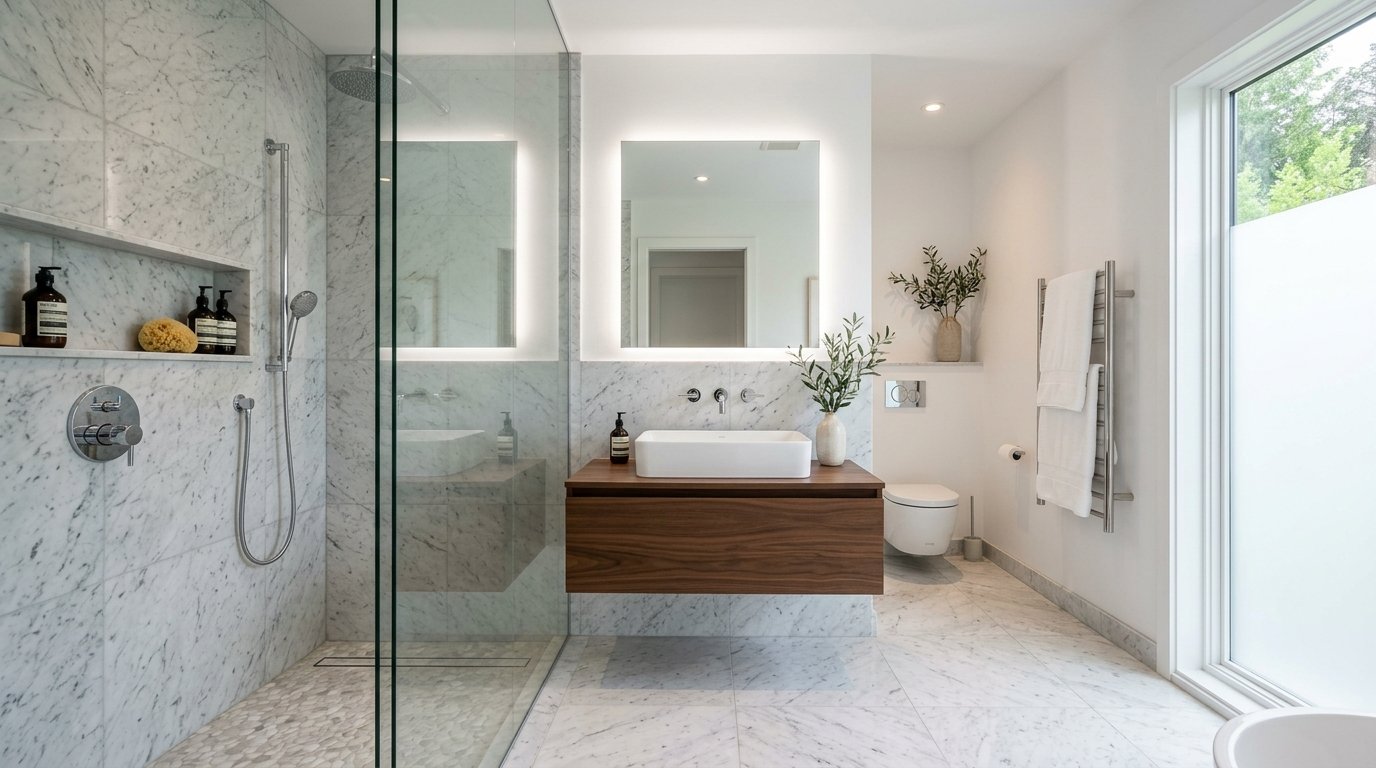
A proper bathroom plumbing plan should consider supply, hot-water generation and drainage before selecting fixtures.
Can larger pipes improve water pressure?
Pipe sizing affects flow and pressure loss within the building, but replacing pipework is not a universal fix. If the incoming supply itself is limited, changing internal pipe sizes may not create the performance expected.
A plumber should measure and assess the actual system before recommending major alterations. This is especially important when walls and floors would need to be opened for new pipe routes.
Can you fit a water-pressure booster?
Boosting equipment can be appropriate in some circumstances, but it must suit the water-supply rules, plumbing system and property. Directly pumping from the mains is controlled and cannot simply be approached as “fit the largest pump”.
A competent plumber can advise whether a compliant accumulator, break tank, booster set or another solution is appropriate. The answer depends on measured incoming performance, space, noise considerations, expected demand and local water-company requirements.
For many homes, correcting a restriction or local fault is a much simpler answer than installing boosting equipment.
New-build and upper-floor pressure issues
Properties at higher elevations or upper floors can experience different supply characteristics from nearby lower properties. Apartment systems may also use communal tanks or booster equipment outside the individual flat.
If you live in a managed building, ask the managing agent whether neighbours are affected and whether communal plant is involved before arranging invasive work within your flat.
What a plumber may test
Depending on the issue, a plumber may check:
- static and dynamic pressure
- flow rate at selected outlets
- incoming stop tap and valves
- signs of leaks
- pipe restrictions
- hot-water system operation
- shower or tap components
- simultaneous-demand performance
The aim is to identify where the pressure or flow is being lost rather than starting with a pre-selected product.
Proper Trades can help arrange plumbing services across the Midlands for pressure problems, leaks, bathroom work and larger plumbing alterations.
Frequently asked questions
1. Why is only one tap low pressure?
A local restriction is likely, such as a blocked aerator, valve, hose or tap component. Compare other outlets before assuming there is a whole-house supply problem.
2. Why is my hot water weak but cold water is fine?
The issue may be within the hot-water system, a local valve, restriction or appliance. The diagnosis depends on the system type, so use an appropriate plumber or heating engineer.
3. Can the water company fix low pressure?
The water company is responsible for parts of the public supply and has service standards, but low pressure caused by internal plumbing is generally a property-side issue. First establish whether the problem is internal or affects the wider supply.
4. Will a bigger shower head improve weak pressure?
Not necessarily. A larger head may need more flow and can make poor performance more noticeable. Confirm the available supply and shower requirements before changing equipment.
5. Should I fit a pump to increase water pressure?
Only after the system has been assessed. Pumps and booster systems must be suitable for the plumbing arrangement and water-supply requirements. Fixing a restriction or valve issue may be more appropriate.
6. Does low pressure mean there is a leak?
It can be one possible cause, especially if the change is sudden, but many other faults produce low flow or pressure. Look for meter movement, dampness and other leak indicators before reaching that conclusion.
Need Professional Help with Your Project?
Proper Trades connects you with vetted, qualified trade specialists across the Midlands. Tell us your requirements, and we will review your project and present a single clear quote.
Enquiry Received
Thank you. We will review your project and get in touch shortly.