Quick Answer
A full or partial rewire may be considered when electrical testing shows widespread deterioration, unsafe wiring methods, inadequate protective measures or multiple circuits that cannot reasonably be brought up to a safe standard with local repairs. Common warning signs include persistent tripping, scorching or heat around sockets, crackling or buzzing, visibly damaged wiring, unreliable circuits and a history of poorly documented alterations.
The age of a house or consumer unit on its own is not enough to make the decision. Condition, test results and the way the installation has been modified matter more.
1. Circuit breakers or RCDs keep tripping
Electrical wiring is largely hidden behind walls, floors and ceilings, so problems are not always obvious until a fault develops. However, there are warning signs that can indicate an installation needs closer attention, from repeated circuit trips and damaged accessories to evidence of overheating or alterations carried out over many years.
None of these signs automatically proves that a property needs a complete rewire. Some faults can be localised, while others may be caused by one appliance or one damaged circuit. The safest approach is to treat warning signs as a reason for a competent electrician to inspect and test the installation rather than trying to diagnose hidden wiring from appearance alone.
Protective devices are designed to disconnect a circuit when they detect certain fault conditions. An occasional trip caused by a clearly faulty appliance is different from a circuit that disconnects repeatedly with no obvious explanation.
Repeated tripping can have several causes, including an overloaded circuit, a faulty appliance, damaged wiring, moisture, deterioration of insulation or an earth-leakage fault. It does not automatically mean the whole house needs rewiring, but it should not be dismissed if it continues.
Avoid repeatedly resetting a device that immediately trips again. If there is burning, visible damage, heat, smoke, sparking or water near electrical equipment, stop using the affected area and arrange professional help. Our guide to what to do when a circuit breaker keeps tripping explains the safe first steps in more detail.
2. Sockets or switches are discoloured, hot or damaged
Electrical accessories should not normally show signs of overheating. Brown or black marks, melting, a persistent hot-plastic smell, loose faceplates or unusual warmth can point to a poor connection, damaged accessory, overloaded connection or another fault that needs investigation.
One damaged socket may be a local problem rather than evidence that all wiring is defective. However, similar signs across several rooms can suggest a wider issue, particularly if the property has been altered repeatedly without a clear record of the work.
Do not remove socket or switch covers to inspect wiring yourself. Parts can remain live even when a nearby switch appears to be off, and identifying the relevant circuit safely requires appropriate testing.
3. You hear buzzing, crackling or arcing sounds
A faint mechanical hum from some electrical equipment can be normal, but crackling, fizzing or intermittent arcing sounds from a socket, switch, consumer unit or fixed fitting warrant attention. These sounds can be associated with loose connections or damaged components and should not be treated as a harmless feature of an older property.
If the sound is accompanied by heat, burning smells or visible damage, stop using the affected equipment where it is safe to do so and seek professional advice promptly.
4. Visible wiring is damaged or poorly altered
Most fixed wiring is concealed, but some may be visible in lofts, garages, utility spaces, cupboards or outbuildings. Damaged cable sheathing, exposed conductors, makeshift joints or cables that appear crushed, burnt or repeatedly extended can indicate unsafe alterations.
Renovated properties can contain several generations of electrical work. A newer kitchen or extension does not necessarily mean the original circuits elsewhere were upgraded at the same time. Conversely, older-looking cable does not automatically mean it is unsafe. Testing is needed to establish its condition.
If you are already planning building work, it is worth coordinating the electrical assessment early. Our guide to electrical planning for a renovation explains how to plan circuits, sockets, lighting and future electrical loads before walls and finishes are closed up.
5. The installation no longer suits how the home is used
A shortage of sockets is primarily a usability issue rather than proof of unsafe wiring, but it can lead to excessive reliance on extension leads and multi-way adaptors. Older homes were often wired for a very different pattern of electrical use from a modern household with home working, kitchen appliances, entertainment equipment, electric heating, EV charging or solar and battery systems.
If major changes are planned, an electrician may recommend alterations to circuits even if existing wiring has not failed. This is particularly relevant during extensions, kitchen refurbishments, loft conversions or whole-house renovations because access is easier before plastering and decorating are complete.
The aim should be to design the installation around expected demand and safe circuit arrangements, not simply add more sockets to whatever is already there.
6. You have no reliable record of previous electrical work
Missing paperwork does not automatically mean an installation is unsafe, but a history of undocumented DIY work, repeated extensions or unknown alterations can justify a more detailed inspection.
A property may have been rewired only in part. For example, a kitchen and extension might have newer circuits while bedrooms remain on older wiring. An inspection can help establish what is actually present rather than relying on assumptions based on the newest visible accessories.
When buying an older or heavily altered property, an Electrical Installation Condition Report can provide a structured assessment of the fixed electrical installation and identify observations that require attention.
Does an old consumer unit mean the house needs rewiring?
Not necessarily. Consumer-unit design has changed over time as electrical standards and protective technologies have developed, but an older unit by itself does not prove that all of the connected wiring must be replaced.
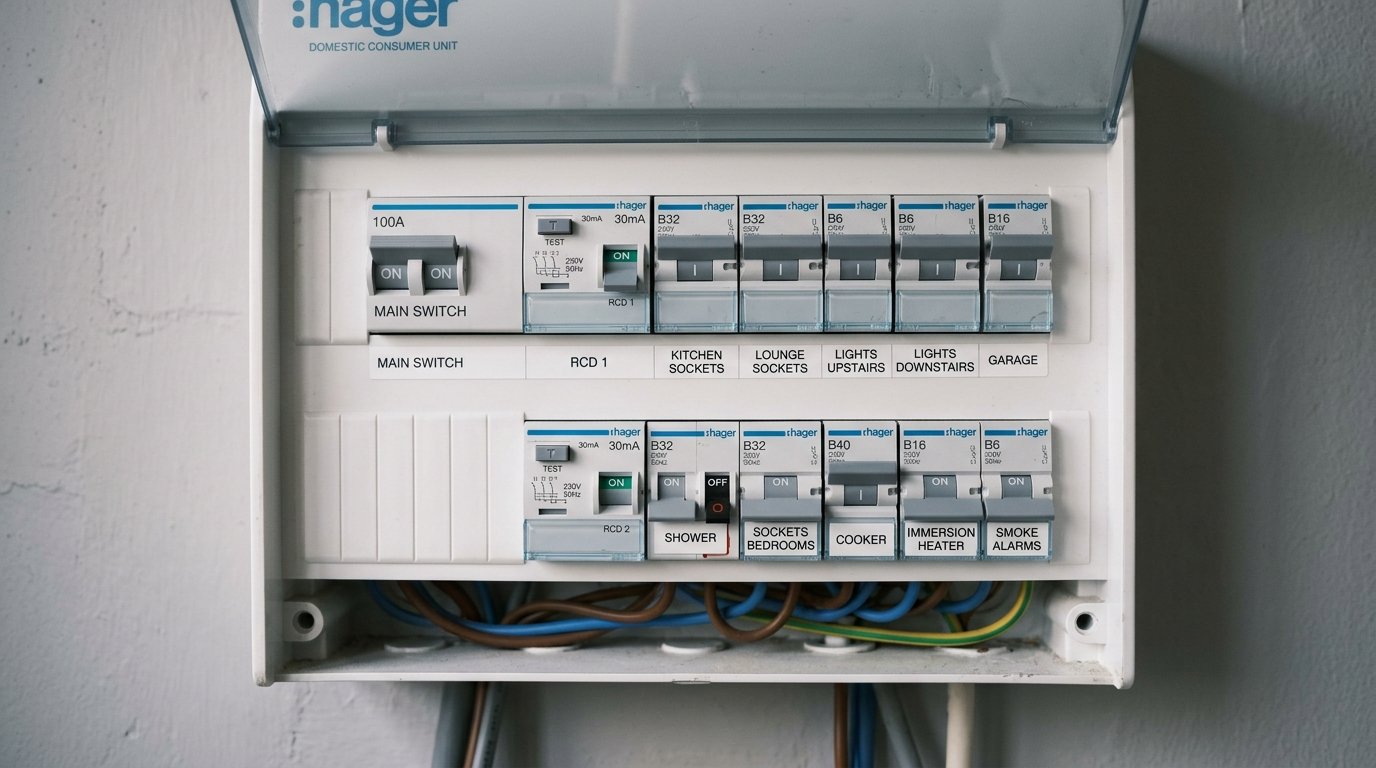
An electrician needs to assess the overall installation, including protective measures, circuit condition, earthing and bonding, test results and whether alterations are required. In some properties the appropriate work may involve replacing or upgrading distribution equipment and correcting specific defects. In others, the condition of the circuits may lead to a broader rewire recommendation.
Avoid accepting a full rewire solely because a consumer unit looks old. Ask what inspection or test results support the proposed scope.
Does a house have a fixed rewiring age?
There is no simple calendar date at which every home automatically needs rewiring. Electrical installations age differently depending on the wiring system, workmanship, loading, environment, alterations and physical damage.
That is why periodic inspection is more useful than a universal lifespan claim. Electrical Safety First recommends periodic inspection intervals for different types of property, while the inspector can recommend a shorter interval where the installation's condition warrants it.
If you are an owner-occupier and are unsure when the electrics were last inspected, arranging an EICR can give you a current evidence-based starting point. Rental properties are also subject to electrical-safety requirements that landlords need to follow.
What happens during an electrical assessment?
An electrician may begin by discussing the property's history, current faults and planned alterations. Inspection and testing can then assess accessible parts of the fixed installation, protective devices, earthing and bonding, circuit arrangements and measured electrical characteristics.
The outcome might be:
- no major work is currently required
- one or more local repairs are recommended
- specific circuits need replacement or improvement
- distribution or protective equipment needs upgrading
- a partial rewire is appropriate
- widespread defects make a full rewire the most practical solution
A clear report or quotation should explain why each recommendation has been made. Where a rewire is proposed, ask whether the recommendation applies to every circuit or only particular parts of the property.
Partial rewiring versus a full rewire
A partial rewire can be suitable when the problem is limited to identifiable circuits and the retained parts of the installation remain serviceable. For example, a major extension may need new circuits while an existing section of the house tests satisfactorily.
A full rewire becomes more likely when several circuits show significant deterioration, the installation contains widespread unsuitable modifications, or the work needed to integrate new and old sections would be disproportionately complex.
There is no benefit in replacing safe serviceable wiring simply to make every cable the same age. Equally, retaining defective wiring to reduce the scope of work can create avoidable problems later. The decision should follow inspection and testing.
Plan rewiring around renovation work where possible
Rewiring can involve lifting floors, accessing ceiling voids, cutting routes into walls and replacing accessories. If you are already planning a renovation, coordinating the electrical work with the construction team can reduce duplicated opening-up and making-good.
Before work begins, decide where furniture, kitchen appliances, televisions, desks, lighting controls, network equipment, outdoor supplies and future technologies are likely to go. This produces a more useful installation than simply recreating the old socket layout.
If solar PV, battery storage or an EV charger is part of your longer-term plan, mention it during electrical design. The electrician can consider future load, equipment location and distribution arrangements without promising that every future system can be accommodated unchanged.
Choosing an electrician for inspection or rewiring
Look for a competent electrician who can explain the inspection findings and the standards relevant to the work. For notifiable domestic electrical work in England and Wales, using an installer registered with an appropriate competent person scheme can simplify compliance procedures where applicable.
Ask for a written scope that identifies circuits to be replaced, new outlets and fittings, consumer-unit work, testing, certification, making-good responsibilities and any exclusions. If you are comparing quotations, compare the proposed specification rather than only the total.
Proper Trades can help coordinate electrical services across the Midlands, including inspections, fault finding, rewiring and electrical work that forms part of a wider renovation.
Proper Trades connects homeowners and businesses across the Midlands with request a free electrical quote.
Frequently asked questions
1. Does an old house automatically need rewiring?
No. Property age alone does not establish the condition of the wiring. Some homes have been rewired or upgraded in stages, while others may contain older circuits that still need to be assessed. Inspection and testing provide a more reliable basis for deciding what work is required.
2. Is frequent tripping a sign I need a full rewire?
Not necessarily. Repeated tripping can be caused by one appliance, one damaged circuit, moisture, overload or a wider wiring problem. An electrician should identify the fault before recommending a rewire.
3. Can an EICR tell me whether my house needs rewiring?
An EICR records the condition of the fixed electrical installation and identifies safety observations. It can provide important evidence for deciding whether local repairs, circuit replacement or wider rewiring is appropriate, although the final scope may require further investigation or design work.
4. Does replacing the consumer unit count as rewiring?
No. A consumer-unit replacement changes the distribution and protective equipment but does not, by itself, replace the fixed cables throughout the property. The condition of the existing circuits still needs to be suitable for connection.
5. Should I rewire before decorating or renovating?
If rewiring is likely, doing it before final plastering, flooring and decoration can reduce disruption. Electrical planning is therefore best carried out early in a renovation rather than after finishes have been completed.
6. What should I do if I smell burning from a socket?
Stop using the affected equipment or circuit where it is safe to do so and arrange professional electrical advice. If there is smoke, fire or immediate danger, treat it as an emergency. Do not remove electrical covers or attempt live fault finding yourself.
Need Professional Help with Your Project?
Proper Trades connects you with vetted, qualified trade specialists across the Midlands. Tell us your requirements, and we will review your project and present a single clear quote.
Enquiry Received
Thank you. We will review your project and get in touch shortly.