Quick Answer
A practical programme should cover visible leaks, water-meter trends, taps, toilets, urinals, accessible valves, hot-water equipment, drainage, pumps, external pipework and emergency isolation points. Keep records of defects and repairs so recurring problems can be identified.
The frequency and technical depth should reflect the building, occupancy, system complexity and legal duties. A small office and a hotel should not use an identical checklist.
1. Know where the water can be isolated
Commercial plumbing problems can disrupt staff, customers, tenants and operations quickly. A small continuous leak can damage finishes and increase water use, while a blocked toilet or failed hot-water system can affect whether parts of a premises can be used at all.
Planned maintenance helps identify visible deterioration and recurring faults before they become emergencies. It should sit alongside—not replace—specialist responsibilities such as water-hygiene risk management, gas safety, pressure-system servicing or other statutory duties that apply to the building and business.
Before inspecting individual fixtures, make sure responsible staff know where the main and local isolation valves are located.
Create a simple record showing:
- incoming water isolation
- plant-room valves
- isolation for floors or tenant areas where present
- kitchen and washroom local valves
- external supplies
- sprinkler or specialist systems that must not be interfered with
Label only where doing so is appropriate and does not create confusion with fire-safety or other critical services. Test operational valves as part of planned maintenance where safe and suitable, rather than discovering they are seized during a burst pipe.
If a pipe does fail, the same first principles in our guide to what to do if a pipe bursts apply, with additional consideration for building management and business continuity.
2. Review water-meter and consumption trends
Unexpected water use can reveal leaks that are not yet visible. Record meter readings at a consistent frequency appropriate to the premises and compare changes with occupancy and operations.
Do not assume every increase is a leak. Production changes, cleaning, irrigation, additional staff or tenant activity can alter demand. The value comes from establishing a normal pattern and investigating unexplained deviations.
Smart or sub-metering can help larger sites identify which area is responsible, but technology only works if someone reviews the data and responds to anomalies.
3. Check toilets and urinals
Sanitary fixtures can waste water continuously without creating an obvious puddle.
Look for:
- cisterns that keep refilling
- water visibly passing into toilet pans
- loose flush controls
- damaged seats or fittings
- slow or incomplete flushing
- leaks at supply connections
- unpleasant odours suggesting drainage or trap issues
- urinal controls that run unnecessarily
High-use washrooms need more frequent observation than rarely used facilities. Staff cleaning reports can be an effective early-warning system if faults are logged consistently.
4. Inspect taps and basins
Dripping taps are easy to notice but can remain unresolved for months in busy buildings. Check that taps shut off correctly, outlets are secure and basin wastes drain freely.
Sensor taps and timed controls should operate as intended rather than running too long, failing to activate or cycling unexpectedly.
Where thermostatic or specialist outlets form part of a water-safety control scheme, maintenance should follow the building's documented risk-management arrangements. Do not alter temperature settings casually as part of a generic checklist.
5. Look beneath sinks and behind accessible panels
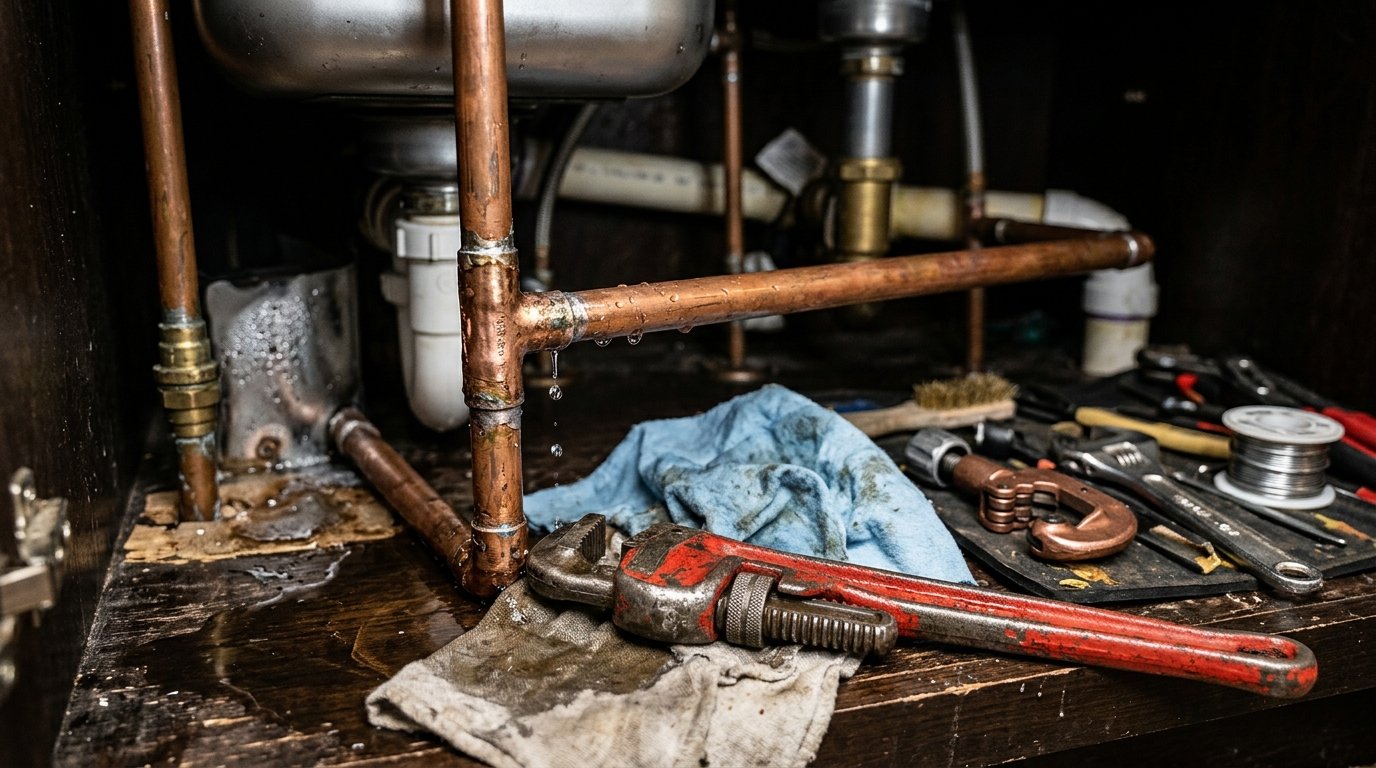
Slow leaks often occur at traps, flexible connections, isolation valves and joints hidden inside cupboards. These areas can stay wet without being noticed until cabinetry swells or odours develop.
During routine checks, look for staining, corrosion, pooled water and damaged fittings without dismantling pressurised components.
If unexplained dampness appears away from visible plumbing, use the approach in our guide to signs of a hidden water leak and arrange professional leak detection where needed.
6. Review hot-water equipment
Commercial hot-water systems vary widely, from small point-of-use heaters to central plant serving showers, kitchens or multiple floors.
Maintenance should follow the equipment manufacturer's requirements and the site's water-safety arrangements. Check for visible leaks, corrosion, fault codes, unusual noise and performance complaints, but leave sealed systems, gas appliances, unvented cylinders and specialist plant to appropriately qualified engineers.
Loss of hot water can have operational consequences in hospitality, healthcare, food preparation and other sectors, so critical systems may need planned redundancy or response procedures beyond ordinary domestic maintenance.
7. Check drainage performance
Slow drains are often easier to address before they become complete blockages. Ask cleaning and facilities staff to report recurring gurgling, odours, slow basins, backing-up toilets or external gullies that overflow.
Avoid repeatedly pouring harsh chemicals into a drainage system without knowing the cause. They can be unsuitable for some systems and do not resolve structural defects, grease accumulation or foreign objects.
For sites with kitchens, grease management may require specific equipment and maintenance arrangements. External drains can also be affected by leaves, silt, damaged covers and vehicle traffic.
8. Inspect accessible pipework and supports
In plant rooms, basements, risers and service areas, look for:
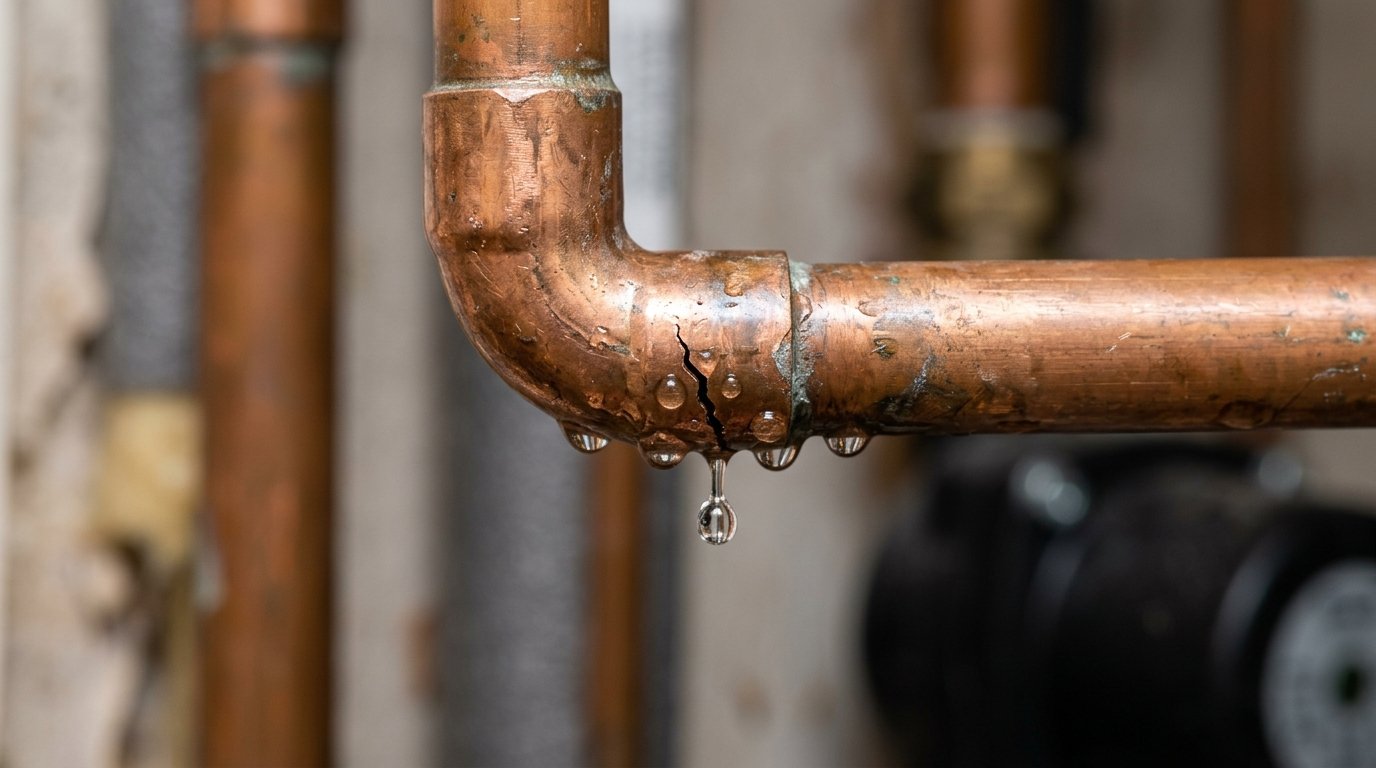
- active drips
- historic staining that has become wet again
- corrosion
- damaged insulation
- loose or missing pipe supports
- condensation on cold pipes
- evidence of impact damage
- unauthorised alterations
Condensation is not the same as a leak but can still damage surrounding materials. Insulation and ventilation may need attention if cold-water pipework is continually wet externally.
9. Prepare for freezing weather
External taps, loading bays, warehouses, roof spaces and poorly heated service areas can contain vulnerable pipework.
Before cold periods, check insulation, exposed valves and any areas where heating has been reduced. Empty or seasonal buildings need a deliberate winter strategy that considers insurance, fire systems, sprinkler requirements and equipment manufacturer's guidance.
Do not drain or isolate critical building systems without authority.
10. Check pumps and boosted-water systems
Larger premises may use booster pumps, storage tanks, sump pumps or sewage-lifting equipment. These systems need planned servicing suited to their design and criticality.
An apparently minor pump alarm can become a major operational problem if ignored. Keep maintenance records, access clear and emergency contact details available.
Where pumps are controlled electrically, coordinate plumbing and electrical maintenance rather than allowing each contractor to assume the other system is responsible.
11. External plumbing and drainage
Walk the perimeter periodically. Check external taps, gullies, manhole covers, visible downpipes and areas where water is ponding unexpectedly.
Not all standing water is a plumbing defect. Roof drainage, landscaping levels and surface-water systems can contribute. Our guide to garden drainage solutions provides background for external water-management issues on landscaped sites.
For commercial yards and car parks, specialist drainage systems may have maintenance requirements beyond normal domestic guidance.
12. Keep maintenance records
A simple log turns isolated repairs into useful management information.
Record:
- date reported
- location
- symptom
- action taken
- contractor used
- parts replaced
- follow-up required
- photographs where helpful
Repeated call-outs to the same toilet, drain or pipe run can indicate that a more permanent repair or redesign is justified.
Records are also useful when responsibility is shared between landlord and tenant or when maintenance performance forms part of a contract.
Water hygiene and Legionella responsibilities
Commercial water systems can create water-hygiene responsibilities, including assessing and controlling Legionella risk where applicable. This is not something that should be reduced to a generic “flush every outlet once a week” internet checklist.
Duty holders should follow current HSE guidance and obtain competent water-hygiene advice appropriate to the premises. Temperature control, little-used outlets, storage tanks, showers and other risk factors may need a documented management system.
General plumbers can support remedial work, but water-hygiene risk assessment and control should be managed as its own compliance responsibility.
Emergency-plumbing plan
In addition to maintenance, create a short response plan covering:
- who can authorise shutdowns
- where isolation valves are
- emergency plumber contact details
- landlord or managing-agent contacts
- electrical emergency procedures
- insurer details
- how affected areas will be closed to staff or public
- critical equipment that depends on water
A clear plan reduces decision-making during a major leak.
How often should commercial plumbing be checked?
There is no single frequency suitable for every component and every building. High-use washrooms can justify routine visual checks, while specialist plant may follow manufacturer service intervals, risk assessments or statutory inspection regimes.
Create a schedule based on risk, usage, past faults and the consequences of failure. If a site has recurring issues, shorten the review interval or address the underlying design rather than simply inspecting the same defect more often.
Planned maintenance versus reactive repair
Reactive plumbing will always be necessary for unexpected faults, but a purely reactive strategy tends to miss slow deterioration. Planned checks can reveal trends and allow work to be scheduled around business operations.
The aim is not to replace every old component pre-emptively. It is to identify condition, maintain critical systems and intervene where evidence shows a growing risk.
Proper Trades can help businesses coordinate commercial plumbing services across the Midlands, including maintenance, repairs, washroom work and plumbing associated with wider construction projects.
For further guidance, read our commercial EICR inspection guide.
Frequently asked questions
1. How often should a business inspect its plumbing?
Use a risk-based schedule. High-use fixtures may need frequent visual checks, while plant and specialist equipment should follow manufacturer, risk-assessment and compliance requirements. There is no single interval that suits every premises.
2. What is the easiest way to spot a commercial water leak early?
Combine routine visual checks with water-meter monitoring and a clear fault-reporting process. Unexplained consumption changes, dampness and continuously running sanitary fixtures are common early clues.
3. Should commercial drains be chemically treated regularly?
Not as a universal rule. Chemical products may be unsuitable for some systems and do not fix structural or recurring drainage problems. Investigate the cause and use an appropriate maintenance method for the site.
4. Is Legionella management part of normal plumbing maintenance?
It overlaps with plumbing but is a specific health-and-safety responsibility. Duty holders should follow current HSE guidance and use competent water-hygiene advice rather than relying on a generic maintenance checklist.
5. What plumbing records should a business keep?
Keep defect reports, service records, invoices, relevant certificates, equipment information and evidence of remedial work. Larger sites may also maintain asset registers, valve maps and planned-maintenance schedules.
6. When should a recurring plumbing fault be redesigned rather than repaired again?
When repeated repairs address the same symptom without removing the cause, ask for a wider assessment. Pipe sizing, drainage layout, fixture selection, access or system design may need improvement rather than another like-for-like repair.
Landscaping
5 SEO resource rewrites • Proper Trades Landscaping content cluster
Need Professional Help with Your Project?
Proper Trades connects you with vetted, qualified trade specialists across the Midlands. Tell us your requirements, and we will review your project and present a single clear quote.
Enquiry Received
Thank you. We will review your project and get in touch shortly.