Quick Answer
Common causes include cracked or missing tiles and slates, defective flashing around chimneys and walls, damaged valleys, blocked or overflowing gutters, failed flat-roof membranes, poor detailing around rooflights and vents, and defects created by previous alterations. Condensation can sometimes look like a roof leak, so the source should be confirmed before repair work starts.
1. Broken, slipped or missing tiles and slates
Roof leaks can start with something as small as one displaced tile or a failed seal, but finding the true source is not always straightforward. Water can travel along felt, membranes, rafters and other building elements before it becomes visible inside, so the damp patch on a ceiling may be some distance from the original entry point.
Understanding the common causes of roof leaks can help you respond quickly without jumping to the wrong conclusion. The aim should be to identify how water is getting into the roof system, why the defect developed and whether surrounding materials have also been affected.
Tiles and slates form the main weathering layer on many UK pitched roofs. If one is cracked, displaced or missing, wind-driven rain may reach the underlay beneath. Whether water enters the property immediately depends on the condition and detailing of the rest of the roof.
Damage may be caused by high winds, impact, frost, failed fixings, foot traffic or gradual deterioration. A small visible defect can sometimes be repaired locally, but several damaged areas may justify a more comprehensive inspection.
Do not assume every cracked tile is the source of an internal leak. Water may be entering elsewhere and travelling along the roof before appearing at the damaged area. A methodical inspection should consider the full route water could take.
2. Failed flashing around chimneys, walls and roof junctions
Flashing is used where the roof meets vertical surfaces or other structures, such as chimneys, parapets and adjoining walls. These junctions are vulnerable because they must remain weatherproof while accommodating movement between materials.
Lead flashing and alternative systems can fail through poor installation, physical damage, movement or deterioration. Mortar around flashing details can also crack or loosen. If staining appears close to a chimney breast or wall abutment, the flashing is one of the areas likely to be checked.
Chimneys add several other potential leak paths, including cracked flaunching, damaged pots, porous masonry and defective pointing. Treating only the visible internal stain without inspecting these details can result in the problem returning.
3. Valley and gutter problems
Roof valleys collect water from two adjoining slopes and therefore handle a concentrated flow during heavy rain. Debris, damaged lining, cracked tiles at the valley edge or poor previous repairs can interfere with drainage and allow water to penetrate.
Gutters can cause similar symptoms. When they are blocked by leaves, moss or debris, water can overflow against fascias, walls or roof edges. Incorrect falls, damaged joints and undersized or poorly positioned outlets can also lead to persistent overflow.
Regular external maintenance is particularly useful for properties near trees. If gutters repeatedly overflow despite being cleared, the cause may be more than a simple blockage and the layout should be assessed.
4. Flat-roof membrane defects
Flat roofs depend on a continuous weatherproof layer and carefully designed drainage. Modern systems can perform well, but leaks may occur where the membrane is damaged, poorly joined or badly detailed around edges, outlets and penetrations.
Ponding water can be a warning sign that drainage or falls are not working as intended, although a small amount of temporary surface water does not automatically prove the roof is leaking. Blisters, splits, cracks, lifted seams and degraded edge details deserve inspection.
Because a flat roof may have insulation and layers beneath the visible covering, water can spread before it reaches the interior. Finding the entry point may require a systematic inspection rather than simply applying sealant to the nearest visible mark.
Our guide comparing pitched roofs and flat roofs explains the different drainage and maintenance considerations associated with each type.
5. Rooflights, vents and pipe penetrations
Any opening through a roof creates additional detailing. Rooflights, soil vent pipes, extractor terminals, aerial fixings and other penetrations all need appropriate flashings or seals.
Leaks can appear when seals deteriorate, components move, drainage channels become blocked or a later installation has been added without correct weatherproofing. Solar installations also introduce mounting points and cable routes that should be designed so the original roof remains watertight.
If a leak began soon after another contractor worked on the roof, make sure the investigation includes that altered area rather than assuming the underlying roof covering has suddenly failed.
6. Ridge, hip and verge defects
Ridge tiles run along the top of a pitched roof, hips cover external angled junctions and verges protect the exposed roof edge. Traditional mortar bedding can deteriorate over time, while mechanically fixed systems can also develop local issues if components are damaged or disturbed.
Loose ridge or hip tiles can create a safety risk as well as a potential route for water. Damaged verge details can allow wind-driven rain to reach the roof edge or contribute to tile movement in exposed conditions.
7. Chimney and masonry defects
Sometimes water enters through the chimney or adjacent masonry rather than through the roof covering itself. Cracked mortar joints, damaged chimney caps, porous masonry or failed leadwork can all contribute.
Older chimneys may have several overlapping issues, which is why simply coating a surface or repointing one joint is not always enough. The inspection should distinguish between defects in the masonry and defects in the flashing where the chimney meets the roof.
8. Condensation mistaken for a leaking roof
Not every damp roof space is caused by rainwater. Warm, moisture-laden air from the home can enter a cold loft and condense on roof surfaces, particularly where ventilation is restricted or insulation and airflow have been altered.
Condensation may show as droplets, mould, damp timbers or widespread moisture rather than a single obvious rain-related stain. The timing can help: if moisture appears during cold weather even without rain, condensation should be considered.
This distinction matters because sealing the roof more aggressively will not solve an internal ventilation problem and could make it worse. A competent assessment should consider both water ingress and moisture generated inside the building.
Why the damp patch may not be below the leak
Water follows gravity, but it can also run along sloping underlay, rafters, pipes and ceiling structures. It may enter at one location, travel horizontally or diagonally and only become visible where it meets an opening, joint or absorbent material.
For that reason, tracing upwards from the stain is only a starting point. Useful clues include whether the leak appears during wind-driven rain, only after prolonged rainfall, after snow, or when a particular gutter or valley is overwhelmed.
Photographs and a simple record of weather conditions can help a roofer reproduce the circumstances that trigger the leak.
Safe checks you can carry out from inside
You should not climb onto a roof without appropriate training and access equipment. From the loft or upper floor, however, you may be able to gather useful information safely.
Look for staining on timbers, damp insulation, daylight through obvious gaps, water trails and mould. During rainfall, listen for drips but avoid touching electrical equipment or wet wiring. If water is close to electrical fittings, treat the situation cautiously and arrange appropriate professional help.
Outside, observations from ground level can include missing tiles, obvious gutter overflow or debris on the ground after high winds. Binoculars can be useful, but avoid leaning from windows or using ladders simply to obtain a closer look.
When a roof leak needs urgent attention
Arrange prompt help if water is entering near electrical equipment, the ceiling is bulging, roof materials appear unstable, a chimney or tile is at risk of falling, or water ingress is substantial.
Even a smaller leak should not be ignored indefinitely. Persistent moisture can damage plaster, decoration, insulation and timber and can create conditions that support mould. The sooner the cause is found, the easier it is to limit secondary damage.
Proper Trades can arrange roofing inspections and repairs across the Midlands. If the inspection shows more widespread deterioration, the guide on roof repair versus replacement can help you understand the next decision.
How a professional roof leak investigation should work
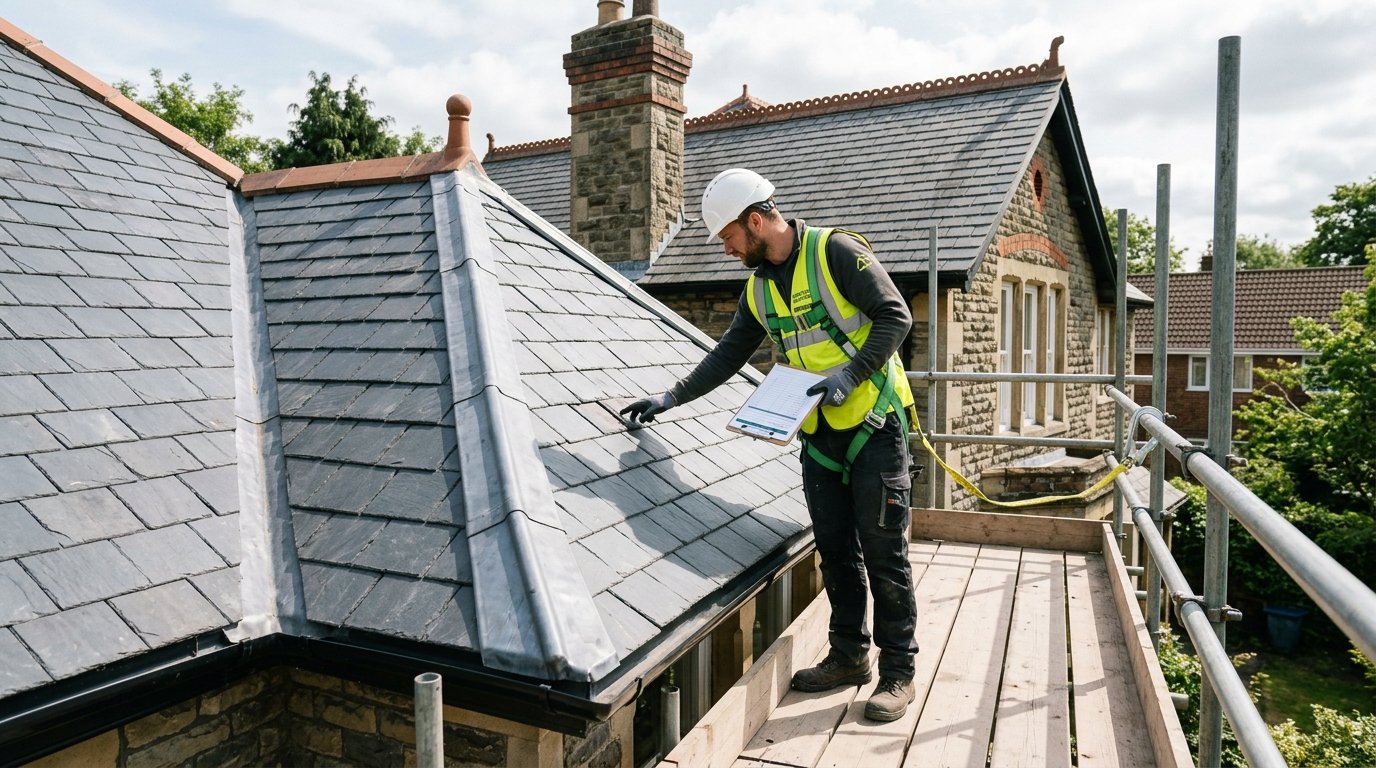
A useful investigation starts with the history of the problem: when it first appeared, what weather triggers it, whether repairs have already been attempted and whether the roof has been altered.
The roofer can then inspect likely entry points and the wider roof condition. Photographs are valuable for inaccessible areas. In some cases, moisture readings or controlled testing may be appropriate, but methods should be chosen carefully to avoid creating additional damage.
A good repair proposal should explain both the suspected cause and the work intended to correct it. Be cautious of repeated applications of generic sealant where the underlying detail has not been identified.
Proper Trades connects homeowners and businesses across the Midlands with construction and renovation work.
Proper Trades connects homeowners and businesses across the Midlands with request a free quote.
For further guidance, read our roof repair vs replacement guide.
For further guidance, read our how often to inspect your roof.
For further guidance, read our detecting hidden water leaks guide.
Frequently asked questions
1. Can one missing roof tile cause a leak?
Yes, it can, particularly during wind-driven rain, but the result depends on the underlay and surrounding roof condition. The missing tile should be replaced and the area checked for damage beneath it rather than assuming the visible gap is the only issue.
2. Why does my roof only leak during heavy rain?
Heavy or wind-driven rain can overwhelm a marginal detail that copes during lighter weather. Valleys, gutters, flashings and roof penetrations are common areas to investigate when leaks only occur in particular conditions.
3. Can blocked gutters make the roof leak?
Yes. Blocked gutters can cause water to overflow against fascias, walls or roof edges. Clearing the blockage may solve the immediate issue, but repeated overflow can indicate a problem with falls, outlets or capacity that needs further assessment.
4. How can I tell the difference between a roof leak and condensation?
Rain-related leaks usually correspond with wet weather and may create a more localised water path. Condensation is often more widespread and can be worse during cold conditions even without rain. A roof-space inspection can help distinguish the two.
5. Is it safe to put sealant over a suspected roof leak?
Temporary sealants can sometimes reduce water ingress, but applying them without knowing the source may hide the problem or make future repair more difficult. A proper diagnosis is preferable, especially for recurring leaks.
6. Should I have the whole roof inspected after finding a leak?
A wider inspection is sensible because water can travel and because the visible leak may not be the only defect. This is particularly useful on older roofs, after storms or where previous repairs have already been carried out.
Need Professional Help with Your Project?
Proper Trades connects you with vetted, qualified trade specialists across the Midlands. Tell us your requirements, and we will review your project and present a single clear quote.
Enquiry Received
Thank you. We will review your project and get in touch shortly.