Quick Answer
A roof repair is generally more appropriate when the problem is isolated, the surrounding materials remain in reasonable condition and there is no evidence of widespread structural or weatherproofing failure. Roof replacement becomes more likely when defects occur across several areas, repairs keep failing, the roof covering is badly deteriorated or the supporting structure needs substantial work.
The most reliable way to decide is to arrange a roof inspection and ask for the findings to be explained in writing rather than choosing an option based on appearance alone.
When a roof repair may be enough
A leaking or damaged roof does not automatically mean you need a complete replacement. In many cases, a localised repair can restore the roof effectively. In others, repeated defects, widespread deterioration or problems beneath the visible roof covering can make replacement the more sensible long-term option.
The difficult part is that the decision cannot be made from one cracked tile, one damp patch or the age of the roof alone. A proper assessment needs to look at the roof as a complete system: coverings, battens, underlay or membrane, flashing, valleys, ventilation, drainage and the supporting structure beneath.
Roof repairs are intended to deal with specific defects without replacing materials that are still performing correctly. This can be a proportionate option when damage is clearly contained to one area.
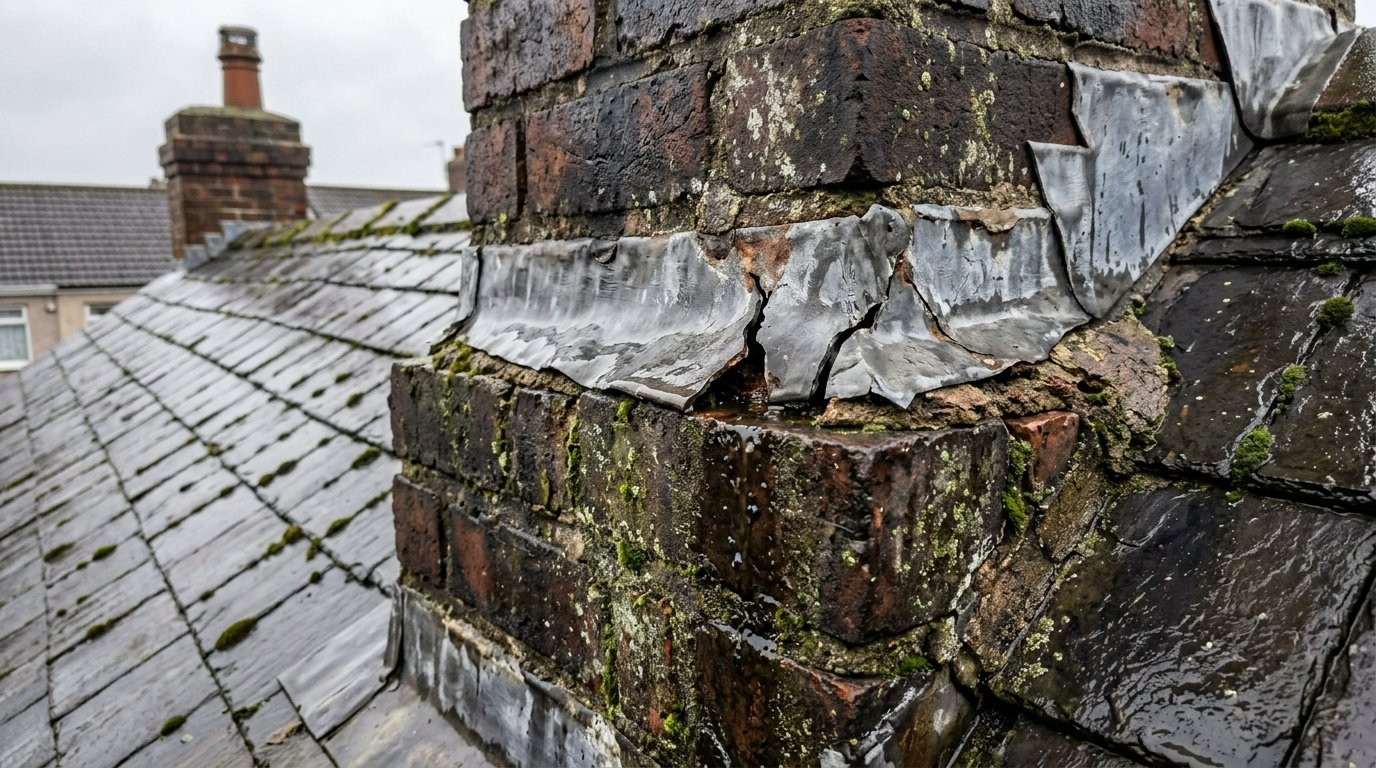
Examples include a small number of slipped, cracked or missing tiles; a local flashing defect around a chimney or abutment; a damaged ridge tile; a leaking gutter joint; or an isolated problem around a rooflight. If the surrounding roof remains sound and the source of water ingress can be identified with confidence, targeted work may solve the problem without unnecessary disruption.
A repair can also make sense after a storm when otherwise sound roofing materials have been displaced or damaged by wind. However, storm damage should still be inspected carefully because a visible tile problem may be accompanied by damage to battens, underlay or roof edges.
The key question is not simply whether something can be patched. It is whether the repair is expected to work as part of the existing roof and whether the remaining materials are in good enough condition to justify retaining them.
If you are dealing with an active leak, our guide to the common causes of roof leaks explains why the internal damp patch is not always directly below the point where water is entering.
Signs that roof replacement may be worth considering
Replacement becomes a stronger possibility when defects are widespread rather than localised. A roof with repeated leaks in different areas, large sections of damaged covering, significant sagging, rotten roof timbers or failing underlay may need a broader solution.
Recurring repairs are another useful warning sign. One previous repair does not mean a roof is failing, but repeated call-outs for different defects can indicate that several parts of the roof are reaching a similar stage of deterioration. At that point, continuing to repair individual symptoms may become disruptive without addressing the overall condition.
You should also consider what is found beneath the tiles or slates. The outer covering is only one part of the roof. Battens can decay, membranes can become brittle or damaged, and poor ventilation can contribute to condensation and timber problems. These issues are difficult to judge accurately from ground level.
The roof's age can provide useful context, but it should not be used as an automatic replacement date. Materials, installation quality, exposure, maintenance and previous alterations all affect how a roof performs. Some older roofs remain serviceable, while a much newer roof can develop serious defects if detailing or installation was poor.
Look at the pattern of damage, not just one symptom
A single symptom can have several causes. For example, staining on a bedroom ceiling might be caused by a slipped tile, defective flashing, condensation or water tracking from another part of the roof. Moss growth can be mostly cosmetic in one location but can contribute to blocked drainage in another. A cracked tile may be genuinely isolated or one of many similar failures.
That is why a good roof inspection should look for patterns. Are problems concentrated around one chimney? Are several roof slopes affected? Are tiles breaking because of impact, frost damage or age? Are gutters overflowing because they are blocked, undersized or receiving water from a poorly detailed roof junction?
This broader view reduces the risk of paying for work that fixes the visible symptom but leaves the underlying cause untouched.
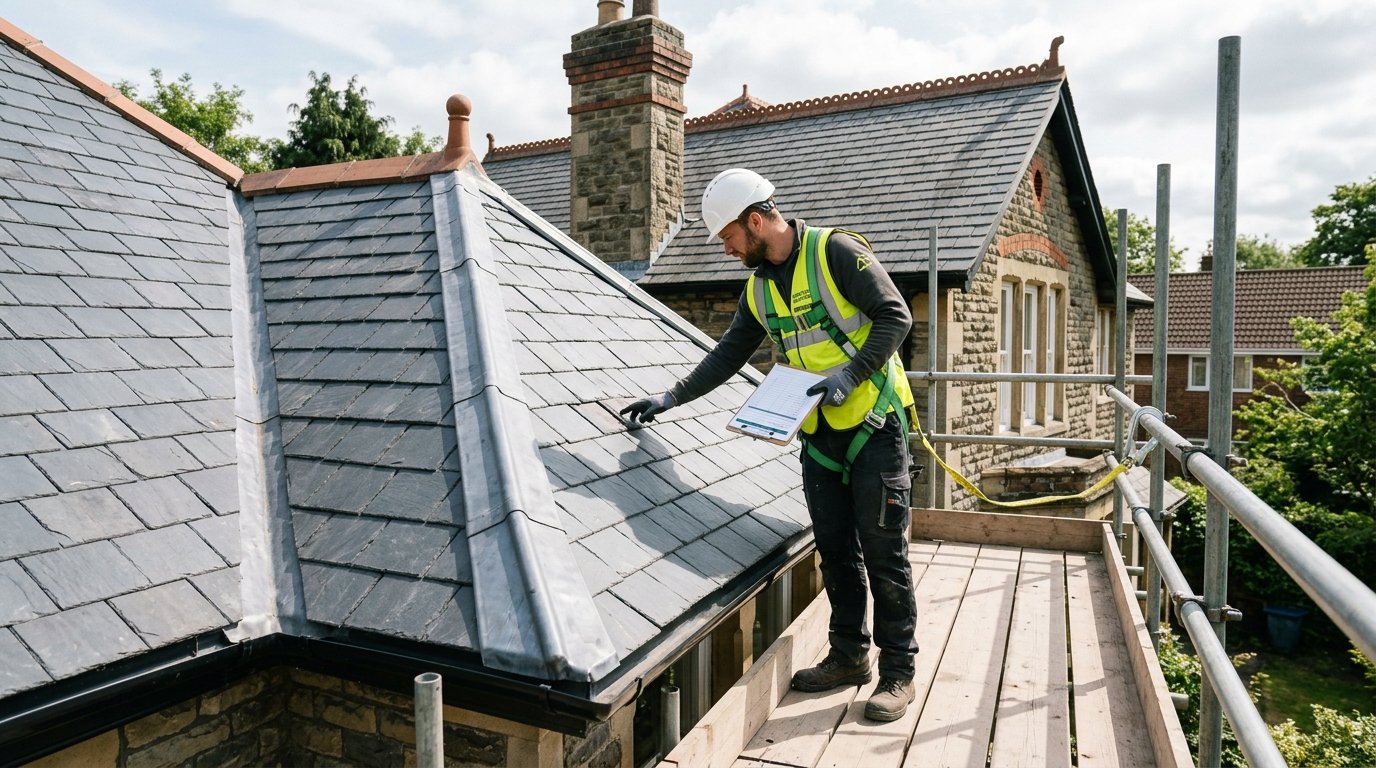
What should a roof inspection cover?
The exact inspection will depend on access and roof type, but a useful assessment may consider:
- tiles, slates or the flat-roof covering
- ridges, hips, verges and valleys
- chimney stacks and lead or alternative flashing
- rooflights, vents and pipe penetrations
- gutters, outlets, fascias and soffits
- signs of movement, sagging or uneven roof lines
- the condition of accessible roof timbers
- underlay or membrane where it can be inspected
- signs of damp, staining or condensation inside the loft
- ventilation and insulation where they may be contributing to moisture problems
Photographs are helpful, particularly where the homeowner cannot safely view the roof directly. If replacement is recommended, ask which findings make repair less suitable. If repair is recommended, ask whether any other areas are likely to need attention in the near future.
Proper Trades can help arrange roofing services across the Midlands for inspections, repairs and larger roofing projects.
Repairing part of a roof versus replacing one roof slope
The decision is not always limited to a tiny repair or a complete new roof. Sometimes an intermediate approach is appropriate. For example, one roof slope may be significantly more weathered because of exposure, previous work or a long-standing defect, while another slope remains in better condition.
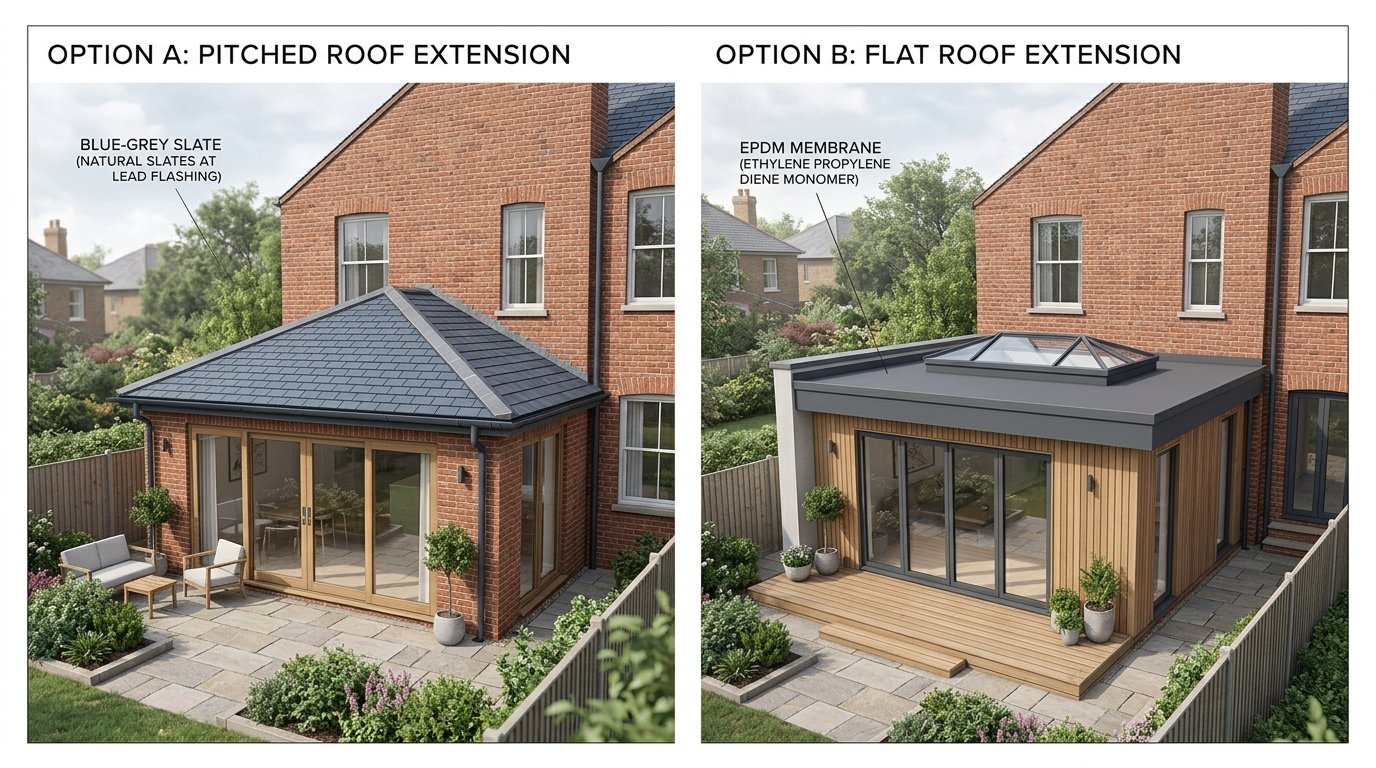
Similarly, a flat-roof section attached to a mainly pitched property may need replacement independently. Chimney works, guttering and roofline components can also be dealt with as separate packages if that is technically sensible.
A contractor should be able to explain why the proposed boundary of the work has been chosen and how new materials will integrate with retained materials. Junctions deserve particular attention because poor detailing between old and new work can create future leak points.
Think about planned work elsewhere on the property
Roof decisions should also take account of projects you already expect to carry out. If you plan to install solar panels, convert a loft, alter a chimney or build an extension, coordinating the work can avoid doing the same access or roofing work twice.
For example, before installing solar PV it can be sensible to confirm that the roof covering and structure are suitable for the installation. If substantial roofing work is already likely, carrying it out before panels are fitted may simplify future maintenance. Our guide on preparing for roof replacement covers the practical steps homeowners can take before work begins.
Where a roofing project overlaps with structural alterations, you may also need construction and renovation services alongside the roofing team.
How to compare roof repair and replacement quotations
Do not compare quotations by headline total alone. A useful written quote should make it clear what is being removed, repaired or replaced and what is excluded.
For repairs, look for a clear description of the defect, the repair method, materials and any making-good work. For replacement, the scope may need to cover stripping the existing covering, disposal, battens, membrane, insulation where relevant, ventilation, flashings, roofline details and reinstatement.
Also check whether scaffolding or other access equipment is included, how unforeseen defects will be handled and whether photographs or progress updates will be provided. If one quotation is substantially different from another, compare the scope line by line before assuming one contractor is simply more expensive.
Avoid treating a quote as a diagnosis. Ideally, the inspection should explain why the proposed scope is appropriate for the condition of the roof.
What not to do when deciding
Avoid climbing onto the roof yourself unless you are trained and have appropriate access equipment. Roof surfaces can be fragile, slippery and difficult to assess safely.
Do not repeatedly reset the decision after every small repair without keeping a record of what has been done. A simple history of leaks, repairs, photographs and inspection findings can make it much easier to identify whether defects are genuinely isolated or becoming a pattern.
It is also wise to avoid choosing replacement purely because the roof looks old, or choosing repair purely because it has the lower immediate cost. The most suitable option is the one supported by the actual condition and expected performance of the roof.
A sensible next step
If you are unsure whether to repair or replace your roof, start with an inspection that considers the whole roof rather than only the most obvious defect. Ask for photographs, a clear explanation of the findings and a written scope for any recommended work.
Proper Trades helps homeowners, landlords and businesses coordinate roof repairs, inspections and roof replacement projects across the Midlands. You can also submit your project details so the requirements can be reviewed before a team is arranged.
Proper Trades connects homeowners and businesses across the Midlands with construction and renovation services.
Proper Trades connects homeowners and businesses across the Midlands with request a free project quote.
For further guidance, read our pitched roof vs flat roof comparison.
For further guidance, read our guide to preparing for roof replacement.
Frequently asked questions
1. Is a leaking roof always a sign that it needs replacing?
No. Many leaks are caused by local defects such as damaged tiles, failed flashing or a problem around a roof penetration. Replacement is more likely when leaks are widespread, recurring or connected with broader deterioration. An inspection is the best way to distinguish a repairable fault from a roof-wide issue.
2. How do I know if roof damage is localised?
Look for whether the defect has a clear source and whether nearby materials remain sound. A roofer may inspect the external covering, roof junctions and the loft space to determine whether moisture or deterioration extends beyond the visible problem.
3. Does the age of a roof tell me when it needs replacing?
Age is useful context, but it is not a guaranteed replacement schedule. Different materials and installation methods age differently, and exposure and maintenance also matter. Condition should carry more weight than age alone.
4. Can only one side of a roof be replaced?
In some situations, yes. If one slope is significantly more deteriorated and the junctions can be detailed correctly, partial replacement may be technically possible. The roofer should explain how the new and retained sections will work together.
5. Should I replace a roof before installing solar panels?
If the roof is already showing significant deterioration, it is sensible to have it assessed before solar installation. Removing and reinstalling panels later can add complexity, so coordinating roofing and solar work at the planning stage can be useful.
6. What should I ask a roofer before approving the work?
Ask what caused the problem, why repair or replacement is being recommended, exactly what the quote includes, what will happen if hidden damage is discovered, what access is required and what documentation or photographs you will receive when the work is complete.
Need Professional Help with Your Project?
Proper Trades connects you with vetted, qualified trade specialists across the Midlands. Tell us your requirements, and we will review your project and present a single clear quote.
Enquiry Received
Thank you. We will review your project and get in touch shortly.