Quick Answer
Check tyre condition and pressures, fluid levels according to the vehicle handbook, lights, windscreen and wipers, visible warning messages, fuel or charge planning, and whether the car is due known maintenance. Pay attention to new brake noises, vibrations, steering changes, fluid leaks or difficult starting.
If the vehicle has a persistent warning light, damaged tyre, fluid leak or braking problem, arrange professional assessment before travelling.
1. Check tyre pressures when the tyres are suitable for checking
A long journey puts the car through sustained motorway speeds, heat cycles and extended running that can expose faults you might not notice on short local trips. A pre-journey check cannot guarantee that nothing will go wrong, but it can identify obvious tyre, fluid, lighting and maintenance issues before you leave.
The best checklist is simple enough to complete and clear about what should be left to a mechanic. You do not need to dismantle the car or diagnose warning lights yourself. If something looks wrong, investigate it before the journey rather than hoping it will improve on the road.
Use the vehicle manufacturer's specified pressures rather than a generic number from the internet. The recommended pressures may differ depending on vehicle load, wheel and tyre specification, and can usually be found in the handbook, door aperture or fuel-flap information.
Check pressures with an accurate gauge and remember to review the setting if you are carrying several passengers and luggage. Some vehicles specify different loaded pressures.
If the tyre-pressure monitoring system shows a warning, do not simply reset it without checking the tyres. A warning can be caused by pressure loss, a puncture, temperature change or a system issue.
2. Inspect tyre tread and visible condition
For cars in the UK, the legal minimum tread depth is 1.6 mm across the central three-quarters of the tread around the complete circumference. Government road-safety guidance also emphasises checking tyres before longer journeys. citeturn770020search1
Do not treat legal minimum as the only thing to inspect. Look for:
- cuts or exposed cords
- bulges or lumps
- embedded objects
- uneven wear
- obvious sidewall damage
- a tyre that repeatedly loses pressure
Uneven wear can indicate alignment, suspension or pressure issues. A bulge or exposed structural material is a reason to stop and seek professional advice rather than continue because the tread depth appears adequate.
If the car has a spare wheel, check its condition and pressure too. If it uses a repair kit instead, confirm that the kit is present, in date where applicable and compatible with the vehicle.
3. Check engine oil correctly
Follow the vehicle handbook because checking procedures vary. Many cars use a dipstick, while others rely partly or entirely on electronic level measurement.
Where a dipstick is used, park on level ground and follow the manufacturer's guidance on engine temperature and waiting time. The level should sit within the marked operating range.
Low oil can damage an engine, but overfilling can also cause problems. Use the correct oil specification rather than adding whatever grade is available at a service station.
If the oil level has dropped unusually quickly or there is a fresh leak beneath the car, have the cause investigated before a long journey.
4. Check coolant only when safe
Cooling systems can be hot and pressurised. Never remove a coolant cap from a hot engine simply because you want to check the level before leaving.
When the vehicle is cold and the handbook permits it, check the level against the reservoir markings. If coolant is repeatedly low, topping it up is not a complete repair; the system may be leaking or have another fault.
Use the correct coolant specification and mixture. Different coolants are not automatically compatible because they share a similar colour.
5. Washer fluid, windscreen and wipers
Good visibility matters in rain, spray and low sun.
Top up the washer reservoir with an appropriate screenwash mixture and check that the jets work. Inspect wiper blades for splits, smearing, noise or sections that lift from the glass.
Check the windscreen for damage in the driver's field of view and make sure the inside of the glass is clean. Small chips can spread, particularly with temperature changes, so arrange repair assessment before a long trip rather than waiting for a crack to grow.
6. Lights and indicators
Ask another person to help if possible, or use reflections safely to check:
- dipped and main beam
- indicators
- brake lights
- rear lights
- fog lights where fitted
- number-plate lights
- hazard lights
Clean dirty lenses and replace failed bulbs with the correct type where the vehicle is designed for straightforward owner replacement. Many modern LED or integrated lamp units require workshop diagnosis rather than a simple bulb swap.
7. Listen to the brakes
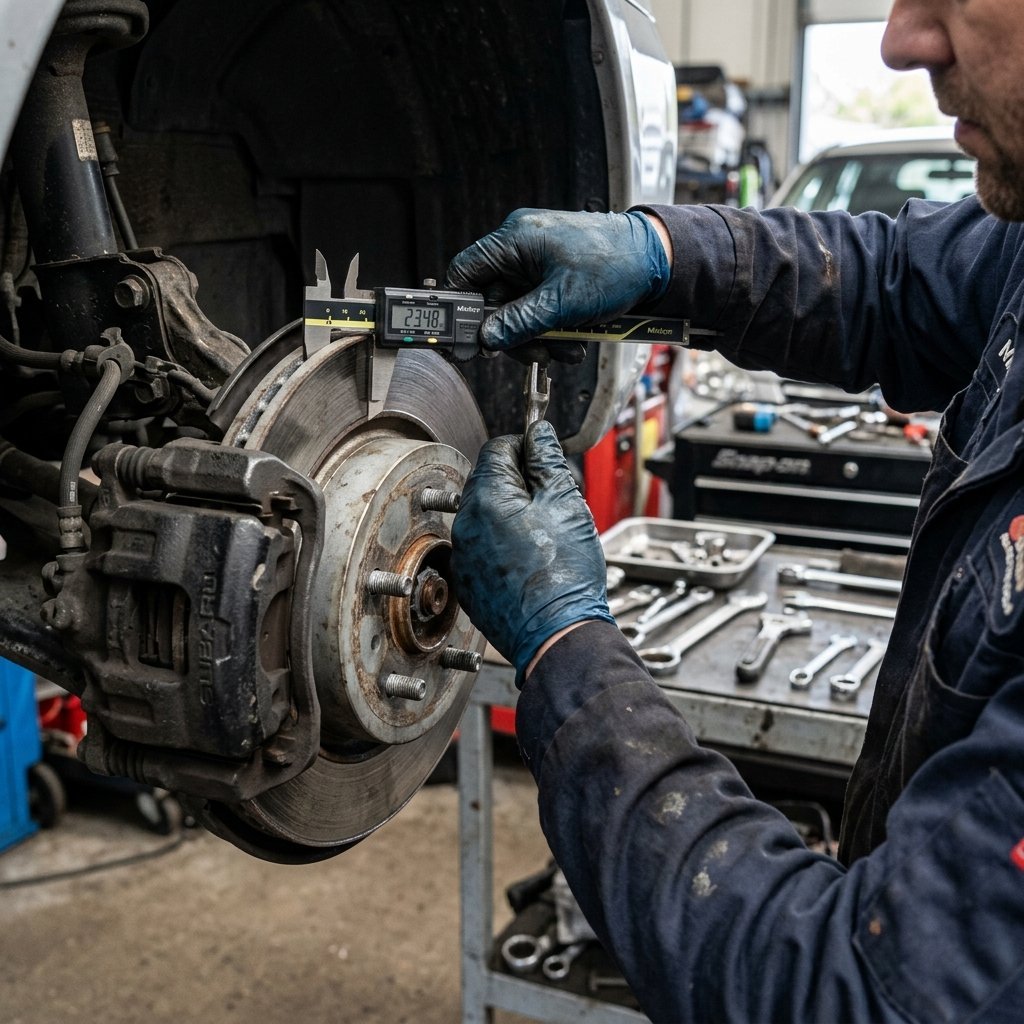
Brakes deserve attention before any long journey. New grinding, scraping, strong vibration, pulling under braking, a change in pedal feel or a brake warning message should be investigated.
A light squeal can have several causes and does not, by itself, tell you how much pad material remains. Equally, brakes can be worn without making dramatic noise. If you are uncertain when they were last checked, a workshop inspection is more reliable than estimating condition from mileage.
Our guide to how to spot early signs of brake wear explains the common symptoms and when not to drive.
8. Check for visible leaks
After the car has been parked, look beneath it for fresh fluid. Clear water from air-conditioning condensation can be normal, but coloured, oily or strongly smelling fluid warrants investigation.
Do not crawl beneath an unsupported vehicle to identify a leak. If fluid appears near a wheel, under the engine or around the transmission area, photograph the location and arrange assessment.
A leak combined with a warning message, overheating or altered brake/steering behaviour is more urgent than an isolated old stain on the driveway.
9. Battery and starting behaviour
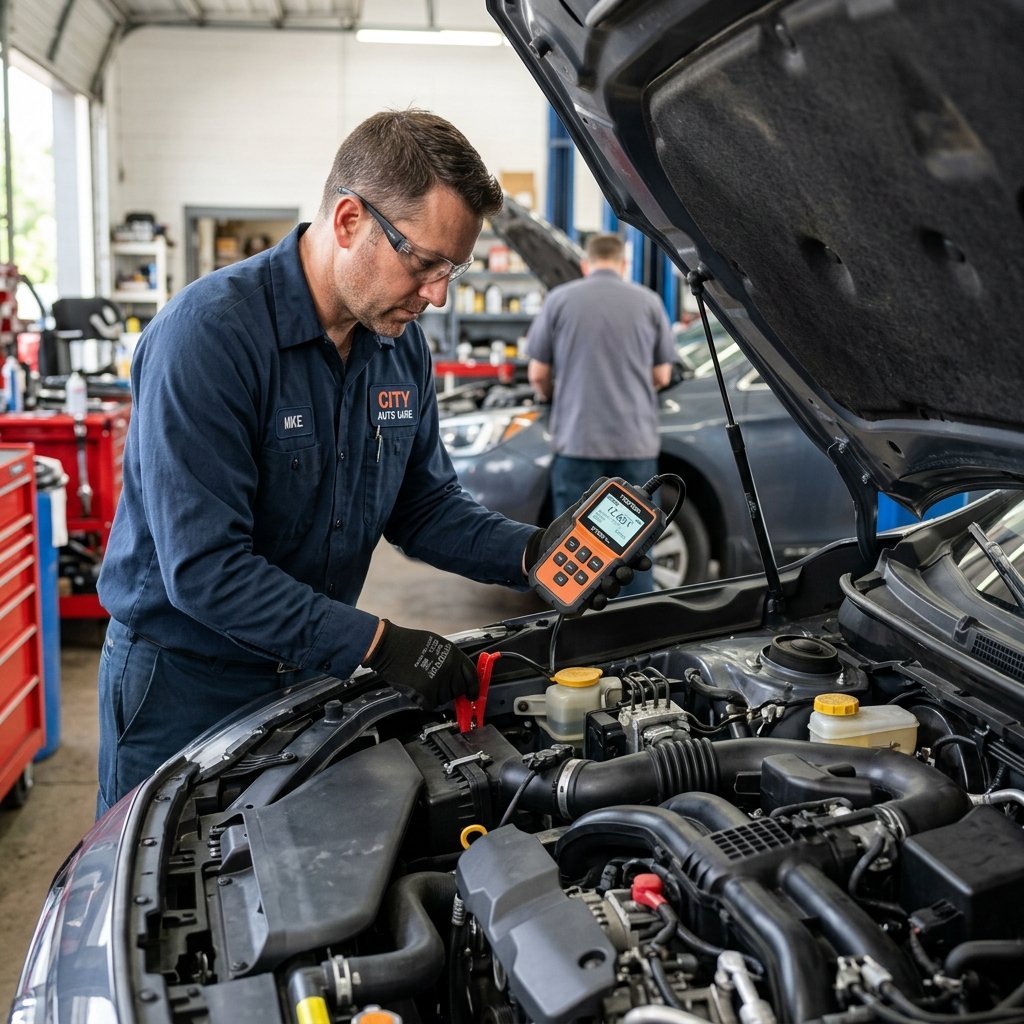
A 12-volt battery problem can leave an otherwise healthy car unable to start. Warning signs include slow cranking, repeated clicking, intermittent electrical resets or needing frequent jump starts.
These signs can also result from charging-system faults or parasitic electrical drain, so replacing the battery without testing is not always the right answer.
If the car has been difficult to start recently, arrange a battery and charging-system test before the trip. Our guide to car battery maintenance and replacement covers this in more detail.
10. Dashboard warning lights
Do not cover, clear or ignore a warning light simply to start the journey. Check the handbook for the exact symbol and follow the manufacturer's guidance.
Some amber warnings allow limited continued driving while arranging service; others indicate faults that can become serious. Red warnings commonly require more immediate action, but meanings vary by vehicle.
If the car is displaying a new message that you do not understand, get it diagnosed before travelling rather than relying on a generic colour chart.
11. Steering and suspension symptoms
Pay attention during normal driving before the trip. New clunks, unstable handling, steering vibration, pulling or a change in ride height can indicate tyre, wheel, steering or suspension problems.
A long motorway journey is not the right place to “see whether it gets worse”. Arrange a mechanical inspection if the behaviour has changed noticeably.
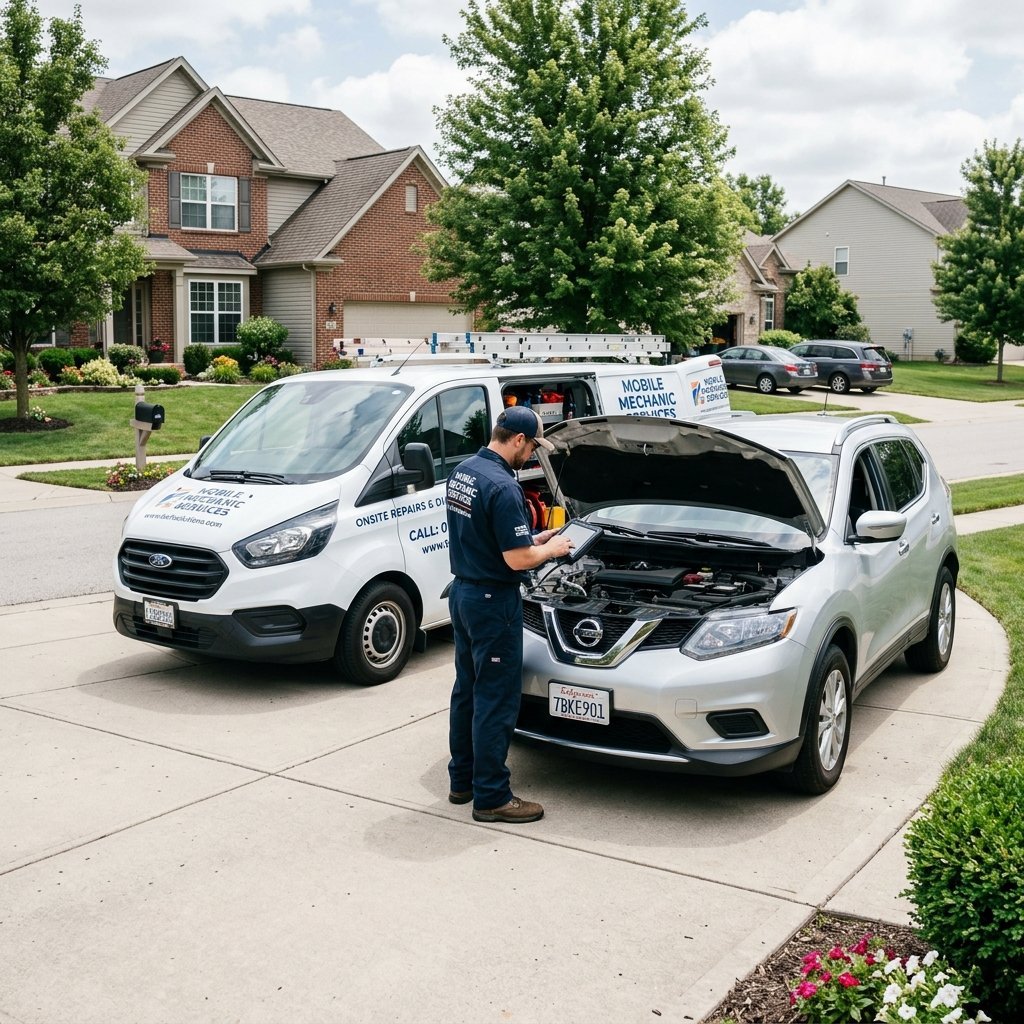
Proper Trades can help arrange mechanic services across the Midlands for servicing, diagnostics and pre-journey checks.
12. Air conditioning and demisting
Air conditioning is not only about summer comfort; it can also help remove moisture from cabin air and demist windows.
Check that the ventilation fan, demisting functions and air conditioning behave normally. A system that is not cooling effectively is not always an emergency, but poor demisting can affect visibility in wet weather.
If the fan only works intermittently or there is an unusual burning smell, arrange inspection rather than relying on the system during a long trip.
13. Fuel or EV charging plan
For petrol or diesel cars, start with enough fuel for the first part of the journey and account for limited service areas on unfamiliar routes.
For an EV, plan charging around realistic range, weather, load and charger availability. Do not treat the dashboard's maximum-range estimate as guaranteed. Leave contingency for diversions or unavailable charge points.
Check that charging cables and any access cards or apps you rely on are available and working before departure.
14. Load the car sensibly
Heavy luggage affects vehicle weight, tyre-pressure recommendations, braking and handling. Keep within the vehicle's load limits and secure items so they cannot move during emergency braking.
Do not block mirrors or rear visibility where this makes driving unsafe. Roof boxes and bike carriers should be installed according to their instructions and checked after loading.
If towing, the preparation is more involved. Verify licence, vehicle, trailer, weight and equipment requirements separately rather than treating a trailer as ordinary luggage.
15. Carry useful essentials
What you carry depends on season and destination, but useful items can include:
- phone charging cable or power bank
- drinking water
- warm layer or waterproof clothing
- torch
- basic first-aid kit
- locking-wheel-nut key where applicable
- tyre repair equipment supplied for the vehicle
- breakdown-provider details
- warning triangle where appropriate and legal to deploy safely
For travel outside the UK, check the specific legal equipment requirements for each country you will enter.
16. Check MOT, tax and breakdown arrangements
Confirm the vehicle's MOT status where one is required, insurance and tax before departure. An MOT is a minimum roadworthiness test at a point in time; it does not replace routine servicing or guarantee that every component will remain fault-free until the next test.
If the MOT is approaching, our guide to what to expect during an MOT test explains what is checked and how to prepare without trying to “game” the test.
When to book a mechanic before travelling
Arrange professional assessment if you notice:
- brake or steering changes
- persistent warning lights
- tyre damage
- coolant or oil loss
- overheating
- difficult starting
- significant vibration
- unusual mechanical noises
- a service or repair that is already overdue under the manufacturer's schedule
Do not leave known defects until the morning of departure if they can be assessed earlier.
Proper Trades connects homeowners and businesses across the Midlands with contact our team.
Frequently asked questions
1. How far in advance should I check my car before a road trip?
Do the main checks early enough that there is time to repair anything you find, then perform a brief final walk-around before leaving. There is no fixed number of days that suits every journey or vehicle.
2. What tyre tread depth is legal in the UK?
For cars, the minimum is 1.6 mm across the central three-quarters of the tread around the complete circumference. Tyres also need to be free from certain serious defects such as exposed structural material.
3. Should I service my car before every long journey?
Not automatically. Follow the manufacturer's service schedule and the car's condition. If a service is due soon or you have symptoms such as leaks, warning lights or brake issues, arranging it before the trip can be sensible.
4. Can I drive with an amber warning light?
It depends on the specific warning and vehicle. Check the handbook and obtain diagnostic advice. Do not assume every amber light is safe to ignore for a long journey.
5. Should I increase tyre pressures for a fully loaded car?
Many manufacturers specify different pressures for heavier loads. Use the vehicle's own pressure information rather than guessing or adding a fixed amount.
6. What if my car has no spare wheel?
Many modern cars use a sealant/inflator kit or run-flat tyres. Know which system your vehicle has, check the equipment is usable and understand its limitations before travelling.
Need Professional Help with Your Project?
Proper Trades connects you with vetted, qualified trade specialists across the Midlands. Tell us your requirements, and we will review your project and present a single clear quote.
Enquiry Received
Thank you. We will review your project and get in touch shortly.