Quick Answer
The test covers safety and environmental items defined by the official MOT inspection manual, including lamps, steering and suspension, brakes, tyres and wheels, seat belts, body and structure, visibility, registration details and emissions or exhaust systems where applicable.
You can prepare by checking lights, tyres, wipers, washers, mirrors, number plates and warning lights and by removing clutter that prevents access to seat belts or inspection points.
When does a car need an MOT?
An MOT checks whether a vehicle meets specified minimum roadworthiness and environmental standards on the day of the test. It covers areas such as brakes, tyres, lights, steering, visibility, seat belts, structure and emissions where applicable.
It is not a full service and does not guarantee that the car will remain fault-free for the next year. Preparing for the MOT means correcting obvious defects and making the vehicle accessible for testing—not hiding faults or clearing warning lights without repair.
Most cars require an MOT once they reach the relevant age threshold and then annually, although exemptions apply to certain vehicles. Use the official GOV.UK MOT status service to confirm the date for your vehicle rather than relying on a sticker or calendar reminder.
Driving without a valid MOT when one is required can result in penalties, with limited exceptions such as travelling to a pre-arranged test or certain repairs under applicable rules. Insurance and roadworthiness requirements still matter.
Book early enough that you have time to address repairs if the car does not pass.
What happens when you arrive?
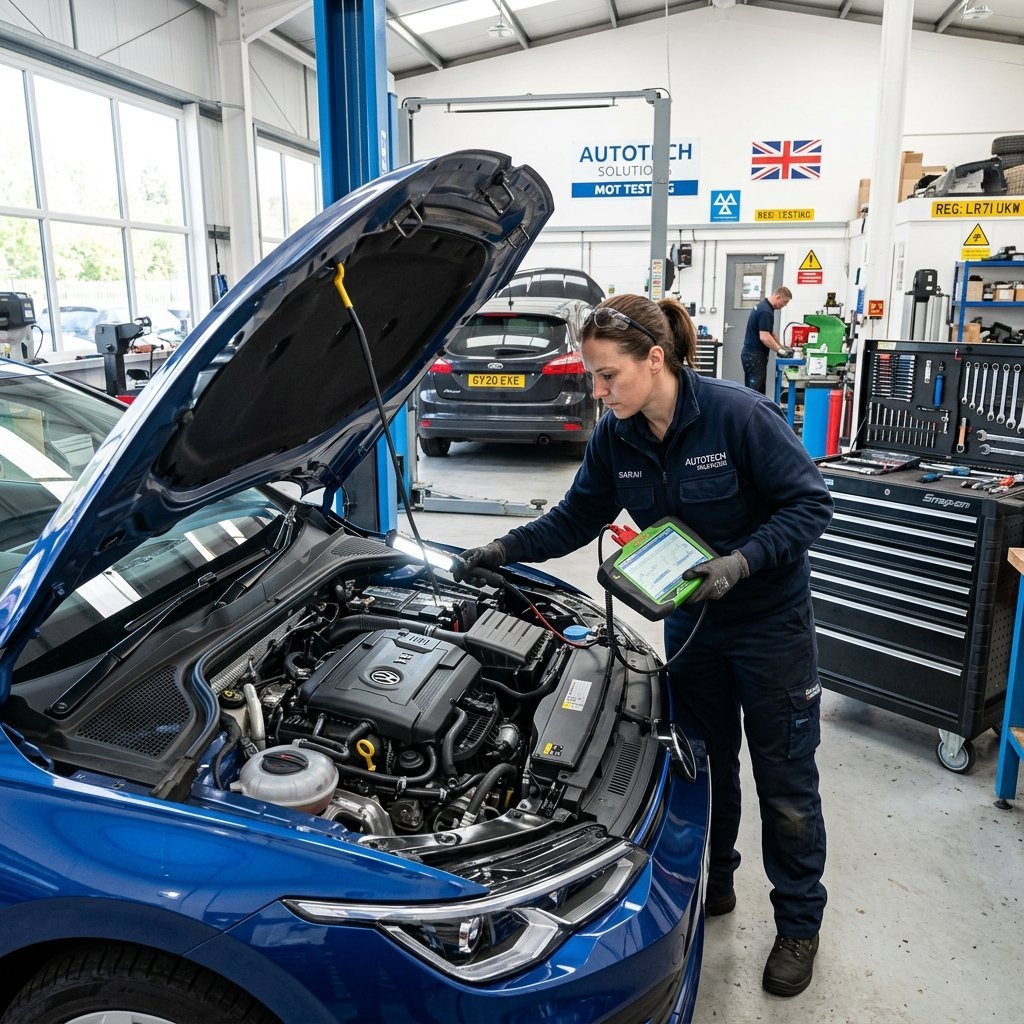
The testing station records the vehicle and carries out the prescribed inspection using approved equipment and procedures. The tester does not dismantle the car like a mechanical rebuild, but they assess accessible testable components and use equipment such as a brake tester where applicable.
The exact sequence can vary by station layout. You may wait on site or leave the vehicle depending on the garage.
The result is recorded digitally, and you can check MOT history through GOV.UK.
1. Registration plates and vehicle identity
The test includes registration plates and relevant identification requirements.
Before the test, check that plates are:
- secure
- legible
- not badly damaged
- not obscured by dirt
- of a legal format and style for the vehicle
Do not fit novelty plates solely for the test or alter characters to change their appearance.
2. Lights and electrical warning indicators
Lamps are a common area where owners can perform simple checks before arrival.
Check:
- headlights
- indicators
- brake lights
- rear lights
- fog lights where required
- hazard lights
- number-plate lights
Some dashboard warning lamps also form part of the test, depending on system and vehicle age.
Do not clear an ABS, airbag or engine-related warning solely to make the dashboard look clean. If a warning is present, diagnose and repair the underlying fault.
3. Tyres and wheels
For cars, tyre tread must meet the legal minimum of 1.6 mm across the central three-quarters around the complete circumference, and tyres must not have certain serious defects. Government road-safety guidance highlights tyre condition as an essential vehicle check. citeturn770020search1
Before the MOT:
- check tread
- inspect for cuts, bulges or exposed cords
- check pressures against manufacturer specification
- make sure wheel nuts or trims do not create obvious issues
- verify that tyres are suitable for the vehicle
Tyre-pressure-monitoring systems can also be testable on vehicles within the applicable criteria.
4. Brakes
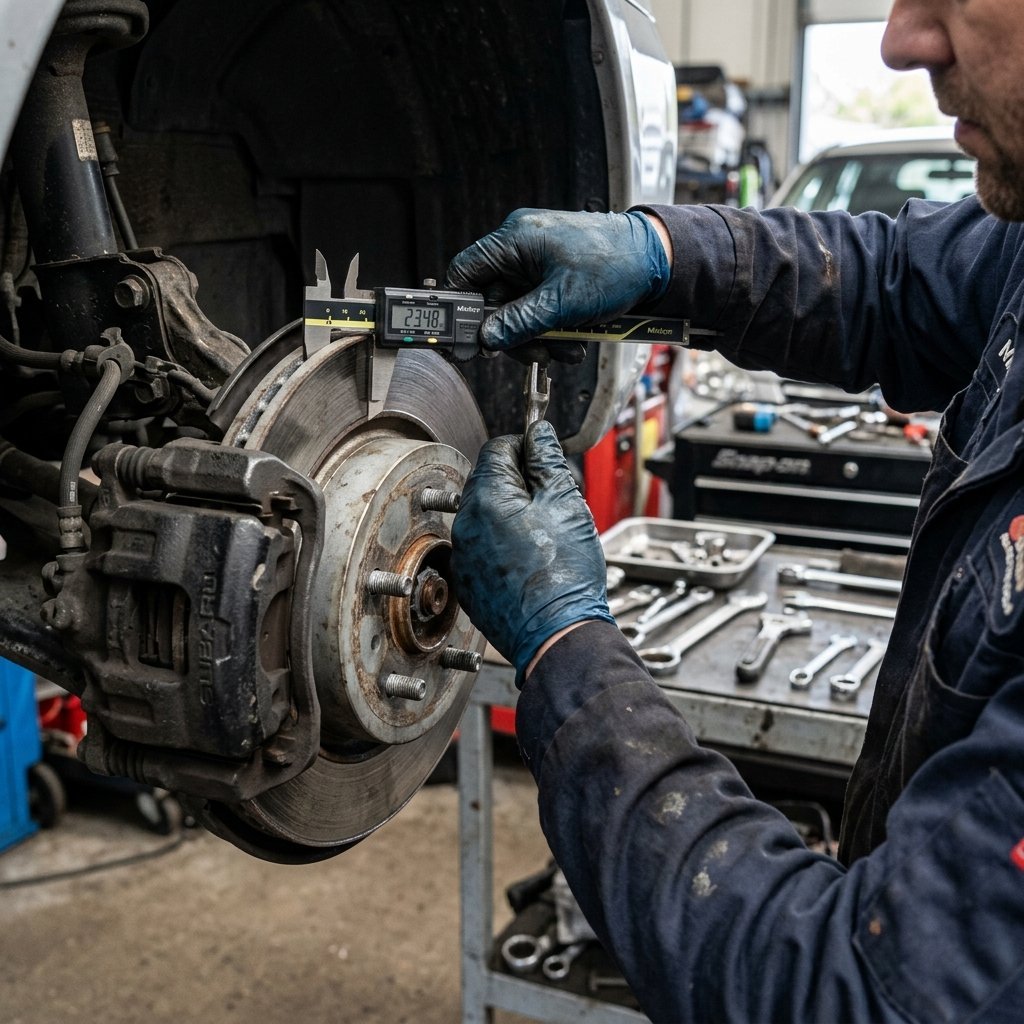
The MOT assesses braking performance and relevant components. This can include service brakes, parking brake and warning systems according to the vehicle.
You do not need to measure pad thickness yourself before the test, but you should not ignore grinding, pulling, abnormal pedal feel or warning lights.
Our guide to signs of brake wear explains common symptoms. If braking is unsafe, do not drive to the MOT station simply because you have an appointment.
5. Steering and suspension
The tester checks steering and suspension components for condition, security and operation within the inspection criteria.
Before the test, pay attention to new knocking noises, excessive steering play, pulling, visible broken springs or a vehicle that sits unusually low on one corner.
These symptoms need mechanical diagnosis rather than a cosmetic MOT-day fix.
6. Windscreen, wipers and washers
The driver needs adequate visibility.
Check that:
- wipers clear the relevant area effectively
- blades are not split or missing sections
- washers deliver fluid
- the windscreen does not have unacceptable damage in critical areas
- mirrors required for the vehicle are secure and usable
Top up suitable screenwash before arriving. A completely empty washer reservoir can lead to an avoidable failure if the system cannot be demonstrated.
7. Seat belts and seats
Make every seat belt accessible. Remove child seats if they prevent the tester from examining a belt or seat where you are comfortable doing so, and avoid filling rear seats with luggage.
Check that belts latch, retract and are not visibly damaged. Seats and their security also form part of the inspection within the applicable criteria.
Do not attempt to repair a damaged belt by stitching or tying it.
8. Horn
The horn is a simple pre-test check. It should operate and be suitable for normal road use.
If it is intermittent or sounds only when the steering wheel is turned, electrical or steering-wheel components may need investigation.
9. Body, structure and doors
The MOT considers parts of the vehicle structure and body that affect safety, including corrosion or damage in prescribed areas.
Rust is not an automatic failure everywhere on the car. The location, extent and effect on structural or safety-related areas matter.
Do not cover corrosion with filler or underseal to conceal a defect. If significant rust is present near suspension, seat-belt or structural mounting points, arrange proper assessment.
Doors, catches and other access-related items can also be included in the test requirements.
10. Exhaust and emissions
For vehicles subject to emissions testing, the procedure depends on fuel type, age and specification. The exhaust system is also inspected for relevant condition, security and leaks.
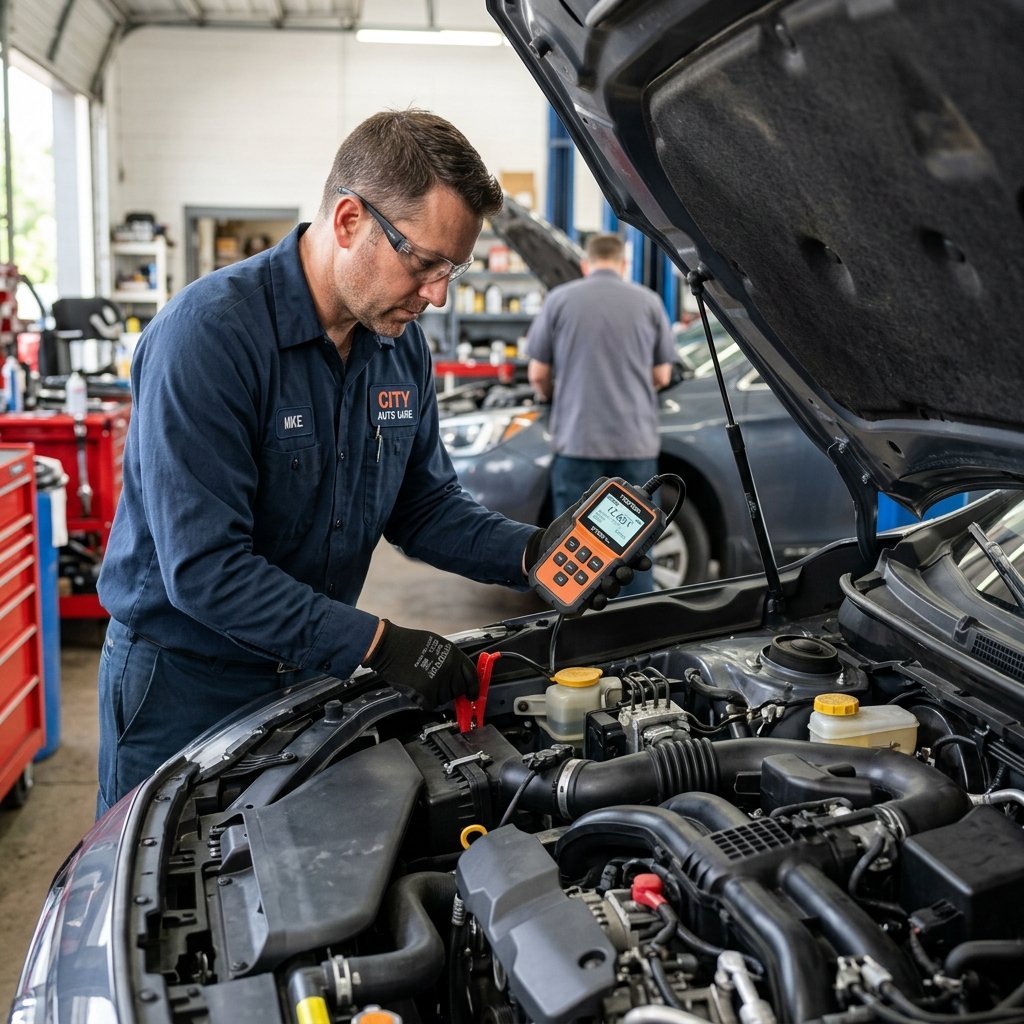
If the engine management light is on, the exhaust is unusually loud, the car emits visible smoke or a diesel particulate filter warning is present, seek diagnosis before the MOT.
Do not use additives or drive aggressively solely to mask a known emissions fault. Correct maintenance and repair are the appropriate route.
11. Fuel system
The tester checks relevant parts of the fuel system for leaks and security. Make sure the fuel cap closes correctly where applicable.
If you smell fuel or see an active leak, do not drive the car to the test centre. Arrange recovery and repair.
EVs and hybrids have different powertrain systems, but they are still subject to MOT checks relevant to their construction and safety systems.
MOT defect categories
Modern MOT results classify defects by severity. Broadly, defects can be recorded as:
- dangerous — a direct and immediate risk or serious environmental impact
- major — may affect safety, environment or other road users
- minor — no significant effect on safety or environment but should be repaired
- advisory — an item that may become more serious or needs monitoring
The exact wording on the official result matters. Do not treat an advisory as a guaranteed prediction of how long a component will last.
What happens if the car fails?
The next step depends on the defect category, whether the vehicle remains roadworthy, the existing MOT status and where repairs are carried out.
The testing station can explain retest arrangements and applicable fees. Do not assume you can legally drive a failed vehicle away simply because the previous certificate has not yet expired; dangerous defects and roadworthiness laws still apply.
If a major safety defect is identified, arrange repair or recovery as appropriate.
Is an MOT the same as a service?
No.
An MOT is a statutory inspection against defined criteria. A service follows manufacturer or garage maintenance procedures such as changing oil and filters and inspecting components for wear.
A car can pass an MOT and still be overdue a service. It can also be mechanically well maintained but fail the MOT because a testable item does not meet the standard.
Treat MOT and servicing as complementary, not interchangeable.
Simple pre-MOT checklist
A few days before the test, check:
- all exterior lights
- tyres and visible wheel condition
- wipers and washers
- windscreen and mirrors
- horn
- seat belts
- number plates
- dashboard warning lights
- obvious fluid or fuel leaks
- brake and steering symptoms
Give yourself time to repair a failed bulb or damaged wiper rather than discovering it in the test bay.
What not to do before an MOT
Avoid:
- clearing fault codes without repair
- disconnecting warning lamps
- hiding corrosion
- overinflating tyres to compensate for wear
- temporarily tying up loose components
- using additives as a substitute for emissions diagnosis
- driving an unsafe car to the station
The purpose of the MOT is safety and roadworthiness, so preparation should make the vehicle genuinely compliant.
How MOT history can help when buying a used car
The GOV.UK history record can show previous pass/fail results, recorded mileages and advisories. Patterns of repeated advisories can be useful questions for a seller.
However, an old advisory may have been repaired without appearing as a separate record. MOT history is one source of evidence rather than a complete service history.
For a used-car purchase, consider a broader mechanical inspection where condition is uncertain.
MOT preparation for a road trip
If your test date is close to a planned long journey, do not rely on the MOT as the only preparation. Check fluids, tyre pressures, battery condition and other travel items in our road-trip car maintenance checklist.
A pass confirms the vehicle met the MOT standard at the time of inspection; it does not replace ongoing maintenance.
Proper Trades can help arrange mechanic services across the Midlands for MOT preparation, repairs, servicing and diagnostics.
Proper Trades connects homeowners and businesses across the Midlands with contact our team.
For further guidance, read our car battery health checks.
Frequently asked questions
1. What does an MOT check?
It checks prescribed roadworthiness and environmental items including brakes, tyres, lights, steering, suspension, visibility, seat belts, structure and emissions where applicable. The official MOT inspection manual defines the test criteria.
2. Is an MOT the same as a full service?
No. An MOT is a statutory test, while servicing is routine maintenance based on vehicle requirements. Passing an MOT does not mean engine oil, filters or every wear item has been serviced.
3. Can I drive my car away if it fails the MOT?
It depends on the defects, existing MOT status and whether the vehicle remains roadworthy. Dangerous defects can make driving unsafe and illegal. Follow the test station and GOV.UK guidance for your circumstances.
4. Will a warning light cause an MOT failure?
Some warning lamps are specifically assessed depending on the system and vehicle. Do not clear them solely for the test; have the underlying fault diagnosed.
5. What are MOT advisories?
Advisories identify items the tester considers worth monitoring or addressing. They are not guaranteed predictions of remaining life, so use them as maintenance information rather than a countdown.
6. How should I prepare for an MOT?
Check simple testable items such as lights, tyres, wipers, washers, mirrors, horn, seat belts, plates and warning lights. If there are known brake, steering, emissions or structural faults, arrange proper repair rather than attempting a temporary workaround.
Need Professional Help with Your Project?
Proper Trades connects you with vetted, qualified trade specialists across the Midlands. Tell us your requirements, and we will review your project and present a single clear quote.
Enquiry Received
Thank you. We will review your project and get in touch shortly.