Quick Answer
There is no universal number. A solar installer should size the array using your annual electricity consumption and the usable roof area, then model expected generation for the property's location, orientation and shading. Modern panel ratings vary, so the number of panels and total system capacity in kilowatt peak (kWp) should be considered together.
A smaller number of higher-output panels can have a similar headline capacity to a larger number of lower-output panels, which is why panel count on its own is not enough.
Start with annual electricity use
The number of solar panels a home needs cannot be calculated accurately from the number of bedrooms alone. Two similar houses can have very different electricity use, roof space, shading and future energy plans, so a useful solar design starts with the property and household rather than a standard panel count.
Installers normally look at annual electricity consumption, usable roof area, panel rating, orientation, shading and how much of the generated electricity is likely to be used on site. Future additions such as an electric vehicle, heat pump, home battery or home office can also change the most suitable system size.
Your electricity bill or online supplier account should show annual consumption in kilowatt hours (kWh). This gives the installer a much better starting point than household size.
Look at at least a full year if possible because consumption varies seasonally. A household that uses electric heating or runs equipment from home may have a very different profile from one that uses gas heating and is empty throughout the day.
Do not assume the solar system must generate exactly the same number of kWh as annual consumption. Timing matters. Solar produces during daylight, while some of your demand may occur at night or in winter when generation is lower. The design should consider both annual totals and usage patterns.
Understand kW, kWp and kWh
Solar terminology is easier once the units are separated.
kWp describes the rated peak capacity of the solar array under standard test conditions. If you install several panels, their rated outputs are added to produce the array capacity.
kWh is a unit of energy. Your electricity bill records consumption in kWh, and solar generation over a day, month or year is also measured in kWh.
A system's kWp rating does not mean it will generate that amount continuously. Actual output changes with daylight, temperature, orientation, shading and other conditions.
Panel wattage changes the number required
Solar panels are available in different physical sizes and power ratings. As technology develops, a replacement quote several years from now may use fewer panels for a similar system capacity than an older design.
That is why comparing only "12 panels" against "10 panels" is not meaningful. Ask for the individual panel rating, total array capacity and expected annual generation.
Also check whether all proposed panels are the same model and whether different roof slopes are being served by suitable inverter inputs or module-level electronics where needed.
Measure usable roof area, not total roof area
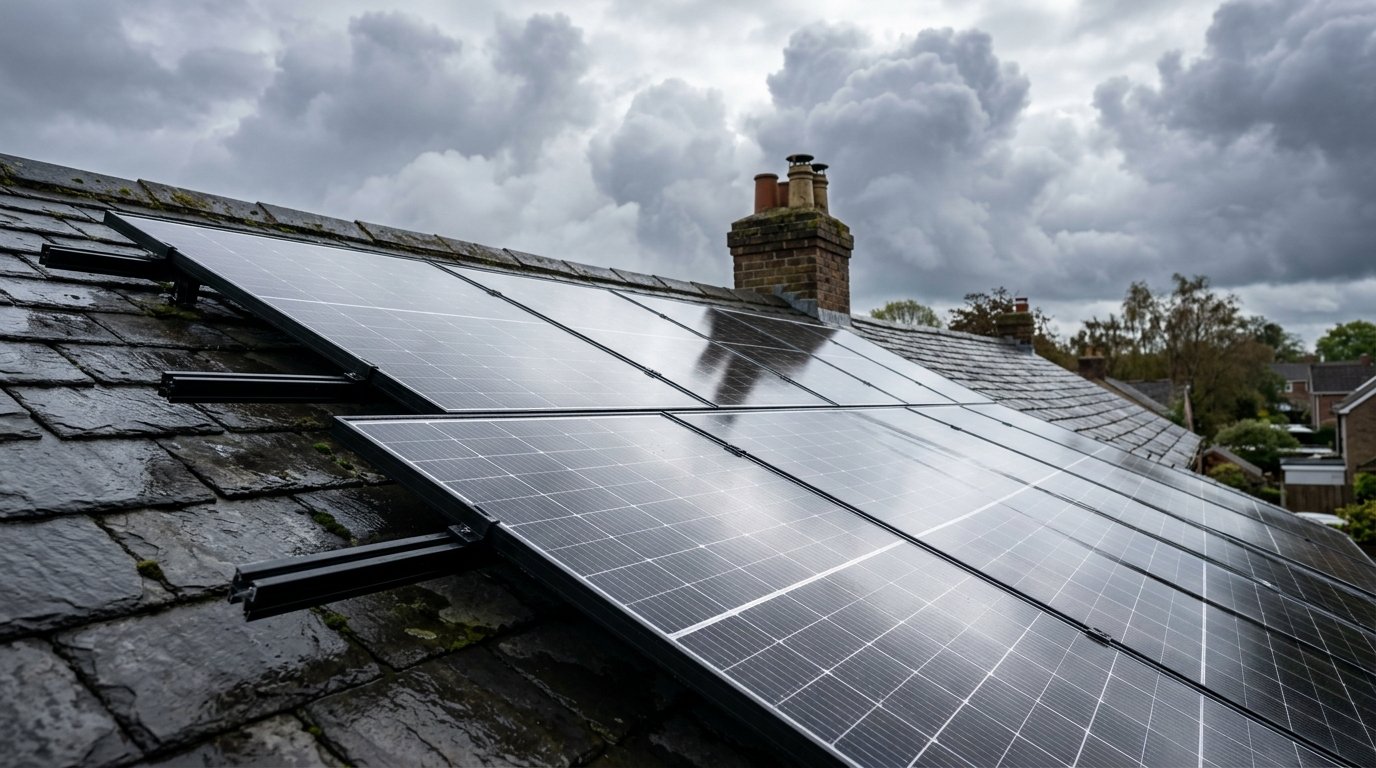
Not every square metre of roof can necessarily hold a solar panel. The layout may need to account for:
- roof edges and safe installation zones
- chimneys and vents
- rooflights and dormers
- valleys and changes in roof shape
- shading
- access for maintenance
- fire and electrical design requirements
- structural limitations
A site survey should establish what is genuinely usable. A simple online aerial view can be useful for early planning, but it is not a substitute for a detailed installation survey.
The Energy Saving Trust notes that a typical home solar array can cover a significant area of roof and provides an online solar calculator to help homeowners explore system size. Treat calculator results as estimates to discuss with an installer rather than final designs.
Roof direction affects the output from each panel
A south-facing roof generally offers strong total annual generation, but east and west orientations can still be useful. If panels are split between east and west slopes, the system can produce over a broader part of the day rather than concentrating output around midday.
That may suit households whose electricity use is higher in the morning and late afternoon. The annual generation estimate should model each orientation separately where appropriate.
If the roof faces north or has complex shading, the installer should be transparent about the effect on expected output rather than compensating with an arbitrary extra number of panels.
Shading changes the practical system size
A panel installed in a heavily shaded location may contribute less than one installed in a clear area. Chimneys, trees, neighbouring buildings and roof structures can all cast shadows.
Sometimes the best design uses fewer panels positioned in better locations. In other cases, panel-level optimisation or a different array configuration can reduce the effect of partial shading.
Ask whether shading has been modelled and whether any additional technology being recommended has a clear benefit for your roof.
For more background, read do solar panels work on cloudy days in the UK?, which explains the difference between ordinary cloud cover and persistent local shading.
Think about when you use electricity
A household that is occupied during the day may use a higher proportion of solar electricity directly. Someone working away from home may export more during daylight and buy electricity back later in the evening.
Smart appliances, timers and behavioural changes can move some demand into solar hours. A washing machine, dishwasher or electric water-heating diverter may be scheduled when generation is strong, provided this suits the household.
This usage profile affects the value of adding extra panels. More generation can increase export as well as self-consumption, and export tariff arrangements vary.
Should you size solar for a future electric vehicle?
If you expect to buy an EV, tell the installer. Home charging can materially change annual electricity consumption, although the amount depends on mileage, vehicle efficiency and where charging takes place.
Solar panels can contribute to EV charging, but a car is often away from home during peak solar hours. A smart charger, battery or flexible charging schedule may help align demand and generation, but the best arrangement is property-specific.
Proper Trades also arranges home EV charger installation where solar and electrical projects need to be coordinated.
What about a future heat pump?
A heat pump can also increase electricity demand. If the household plans to replace a gas or oil heating system in the near future, the solar design should take that into account.
However, heat-pump demand is often strongest in colder months when solar generation is lower. Simply increasing the panel count is not a direct one-for-one solution. The annual and seasonal profiles should be modelled realistically.
How battery storage affects sizing
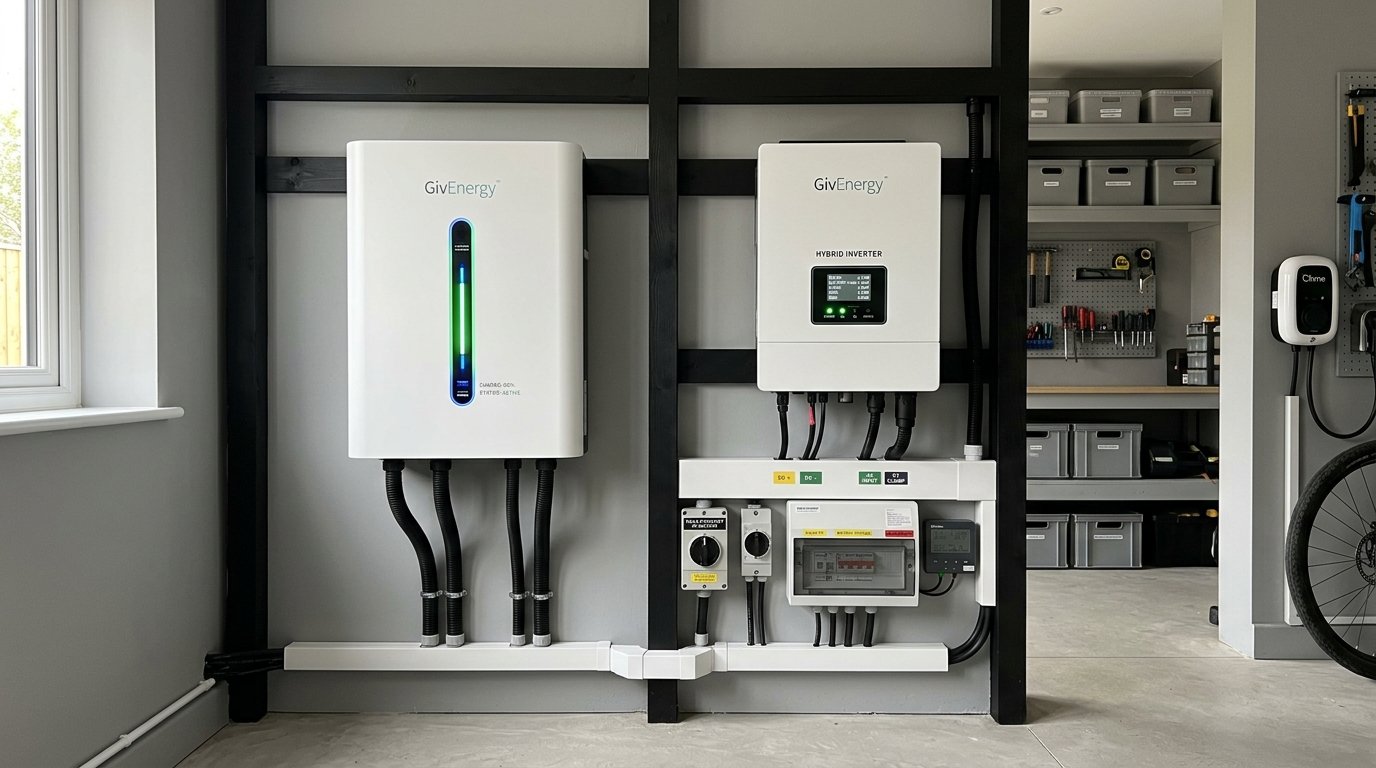
Battery storage can increase the proportion of solar generation used within the home by storing some surplus for later. It does not create additional energy, so the battery and solar array should be designed together around the actual generation and consumption profile.
An oversized battery may spend long periods underused, while an undersized battery may fill early on bright days. The most appropriate balance depends on tariffs, usage and priorities.
Read our guide on solar panels with battery storage before deciding whether both are needed.
Do you need to cover 100% of electricity use with solar?
Not necessarily. Annual solar generation and annual electricity consumption occur at different times, so matching the totals does not make a home independent from the grid.
A system can still be useful if it generates less than annual consumption, and generating more than annual consumption does not mean every unit will be used on site. Surplus may be exported, subject to metering and tariff arrangements.
The right system size therefore depends on your objective: maximise on-site use, make use of available roof area, support future electrification, reduce grid imports or some combination of these.
Questions to ask when comparing system sizes
When one installer proposes more panels than another, ask:
- What is the total kWp of each design?
- What annual generation is estimated?
- What shading assumptions were used?
- How much roof area remains unused and why?
- What proportion of generation is expected to be self-consumed?
- Is a battery included in the assumptions?
- How would an EV or heat pump change the recommendation?
- Are DNO requirements or export limits relevant to the proposed size?
A clear installer should be able to explain the trade-offs rather than presenting panel count as a magic number.
Planning the installation
Once the system has been sized, the project also needs to consider roof condition, electrical capacity, scaffolding, inverter location, cable routes and grid notification or approval where applicable.
Our solar panel installation process guide explains the typical sequence from survey to commissioning and handover.
Proper Trades coordinates solar energy projects across the Midlands and can also arrange roofing or electrical support when those trades form part of the same project.
Proper Trades connects homeowners and businesses across the Midlands with request a free solar quote.
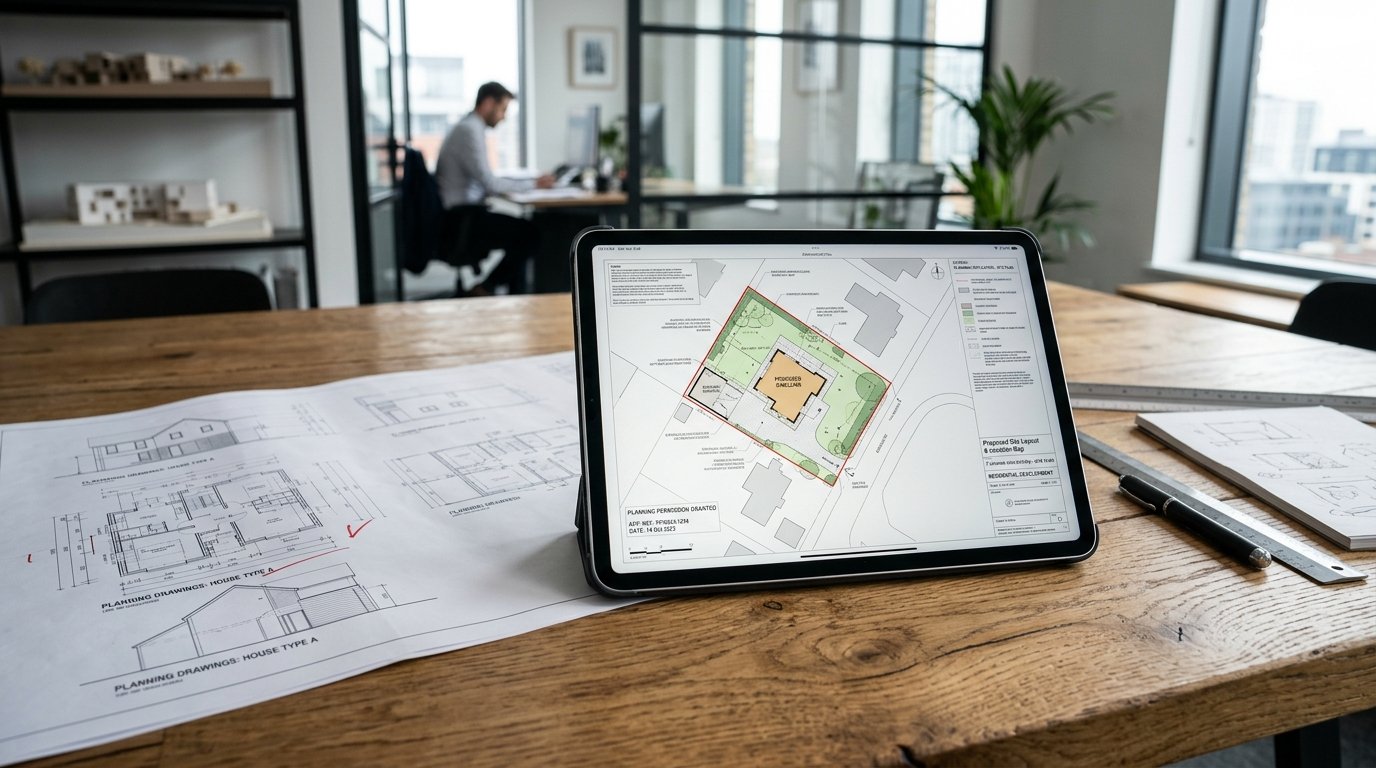
For further guidance, read our solar panel planning permission rules.
Frequently asked questions
1. Can I calculate the number of solar panels from my electricity bill?
Your annual kWh consumption is a useful starting point, but it is not enough on its own. Roof space, orientation, shading, panel rating and when you use electricity all influence the design.
2. Is a larger solar system always better?
No. A larger array can generate more electricity, but the extra panels need suitable roof space and should make sense for the household's demand, export arrangements and future plans. Good design is more important than simply maximising panel count.
3. How much roof space does a solar panel need?
Panel dimensions vary by model, and layouts also need appropriate clearances and space around roof features. An installer should measure usable roof area rather than estimating from the total roof dimensions alone.
4. Can I add more solar panels later?
Sometimes. Expansion depends on roof space, inverter capacity, electrical design, product compatibility and grid requirements. If future expansion is likely, mention it during the initial design so the system can be planned with that possibility in mind.
5. Should I size my solar panels for an EV?
If you expect to charge an EV at home, include that future demand in the assessment. Your mileage and charging pattern matter, so the installer should use realistic expected consumption rather than assuming a fixed amount.
6. How do I compare two solar quotes with different panel counts?
Compare total kWp, panel model, expected annual kWh generation, shading model, inverter design and assumptions about self-consumption. The quote with more panels is not automatically the stronger design.
Need Professional Help with Your Project?
Proper Trades connects you with vetted, qualified trade specialists across the Midlands. Tell us your requirements, and we will review your project and present a single clear quote.
Enquiry Received
Thank you. We will review your project and get in touch shortly.