Quick Answer
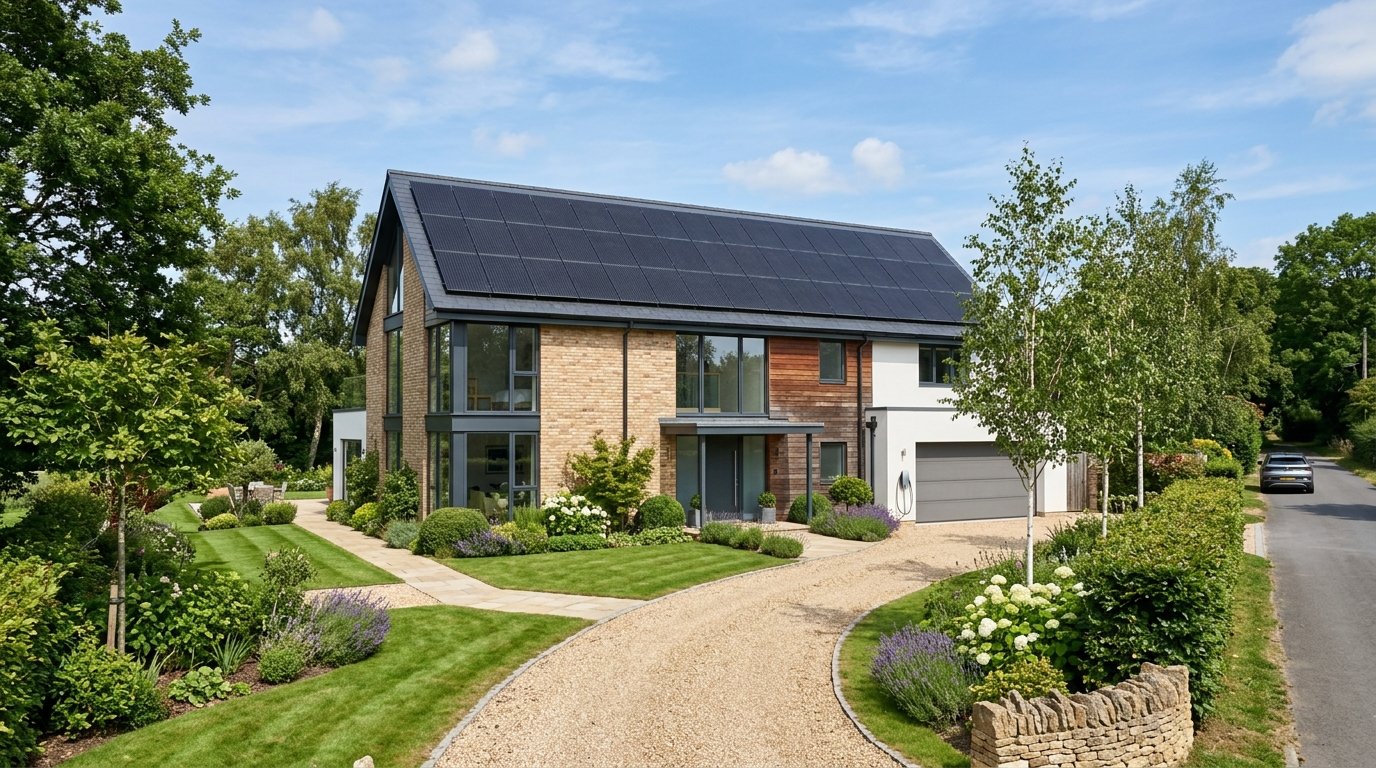
In England, solar equipment on many houses can fall within permitted development if the relevant limits and conditions are met. Planning permission or prior approval may be needed in some circumstances, including certain listed buildings, designated land, prominent installations, flat-roof arrangements and stand-alone panels.
The Planning Portal advises homeowners to discuss the proposal with the local planning authority if there is any doubt. Rules differ across the UK, so this guide is primarily an England-focused overview rather than a substitute for site-specific planning advice.
What does permitted development mean?
Many domestic rooftop solar panel installations in England can be carried out under permitted development rights, which means a full planning application is often not required. However, that is not the same as saying every solar installation is automatically exempt from planning permission.
The rules depend on the property, location, roof type, panel position and whether the building is listed or sits within land with additional planning controls. Before installation, check the current rules that apply to your specific address.
Permitted development rights allow certain types of building work to proceed without a full planning application, provided the project stays within defined limits and conditions.
For solar panels, this can simplify straightforward domestic rooftop installations. The rights still come with design requirements intended to limit visual impact. If the installation falls outside the criteria, a planning application may be required.
Permitted development is separate from electrical standards, building regulations and grid connection requirements. A project can avoid planning permission but still need competent electrical installation, appropriate roof assessment and DNO notification or approval.
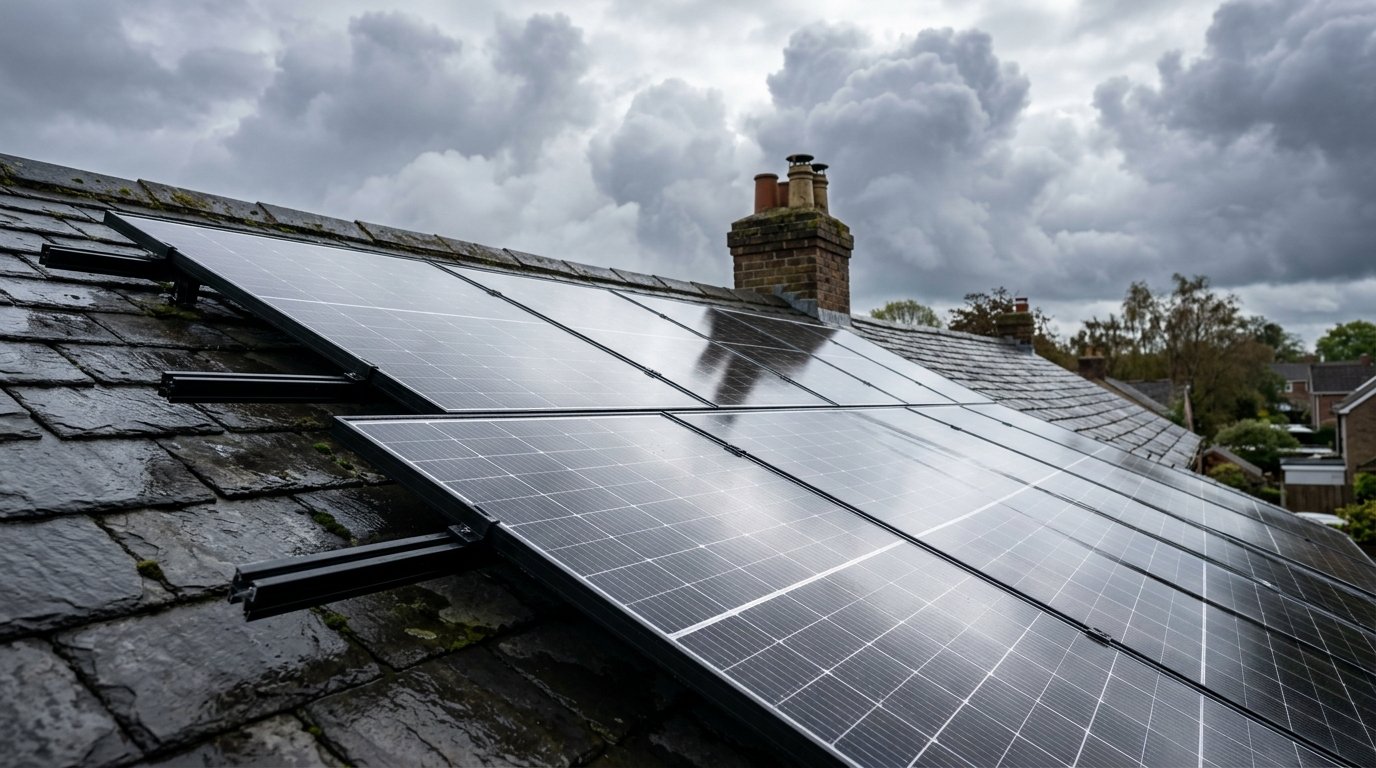
Solar panels on a pitched roof
Planning Portal guidance for England states that solar equipment mounted on a house should be positioned, so far as practicable, to minimise its effect on the external appearance of the building and the amenity of the area.
For pitched roofs, permitted development limits include restrictions on panels projecting above the highest part of the roof and on how far equipment projects from the roof surface. Current Planning Portal guidance should be checked at the design stage because the exact limits and policy context can change.
A conventional flush-mounted array on an ordinary house may therefore be relatively straightforward, but unusual mounting frames, prominent elevations or sensitive properties need closer review.
Solar panels on a flat roof
Flat-roof solar arrays are often tilted on frames to achieve a suitable angle. This can make them more visible above the roof line than panels fixed close to a pitched roof.
Planning Portal guidance includes specific height limits for equipment on flat roofs and additional prior-approval requirements in some designated areas. The array layout should therefore be developed with planning as well as structural and wind-loading considerations in mind.
If you are choosing between roof forms for an extension that may later carry solar, our pitched roof vs flat roof guide explains the broader design differences.
Listed buildings need particular care
Listed buildings are subject to additional controls intended to protect their special architectural or historic interest. Solar work can affect the appearance and fabric of the building, and listed building consent may be required even where ordinary permitted development rules would otherwise appear relevant.
Do not rely on a neighbouring property as proof that your installation is acceptable. Listing status, significance, visibility and previous permissions can differ.
Contact the local planning authority's conservation or planning team before ordering equipment if the building is listed or the panels could affect protected fabric.
Conservation areas and other designated land
Conservation areas, national parks, Areas of Outstanding Natural Beauty or National Landscapes, World Heritage Sites and other designated locations can have additional planning considerations.
The exact restriction depends on the installation and location. In some cases, the position relative to highways or the visibility of equipment becomes important.
This does not mean solar panels are automatically prohibited in conservation areas. It means the design should be checked against the specific planning rules and local character considerations before installation.
Ground-mounted and stand-alone solar panels
Solar panels do not have to be fixed to a building. A stand-alone array in a garden or within the grounds of a property can be useful where the roof is unsuitable, but different permitted development limits apply.
Planning Portal guidance includes restrictions relating to height, array size, boundary distance, number of installations and designated sites. Ground-mounted systems can also have a greater landscape impact than roof-mounted panels.
If a garden array is being considered, obtain planning advice early so the electrical design and cable route are not developed around a layout that later needs to change.
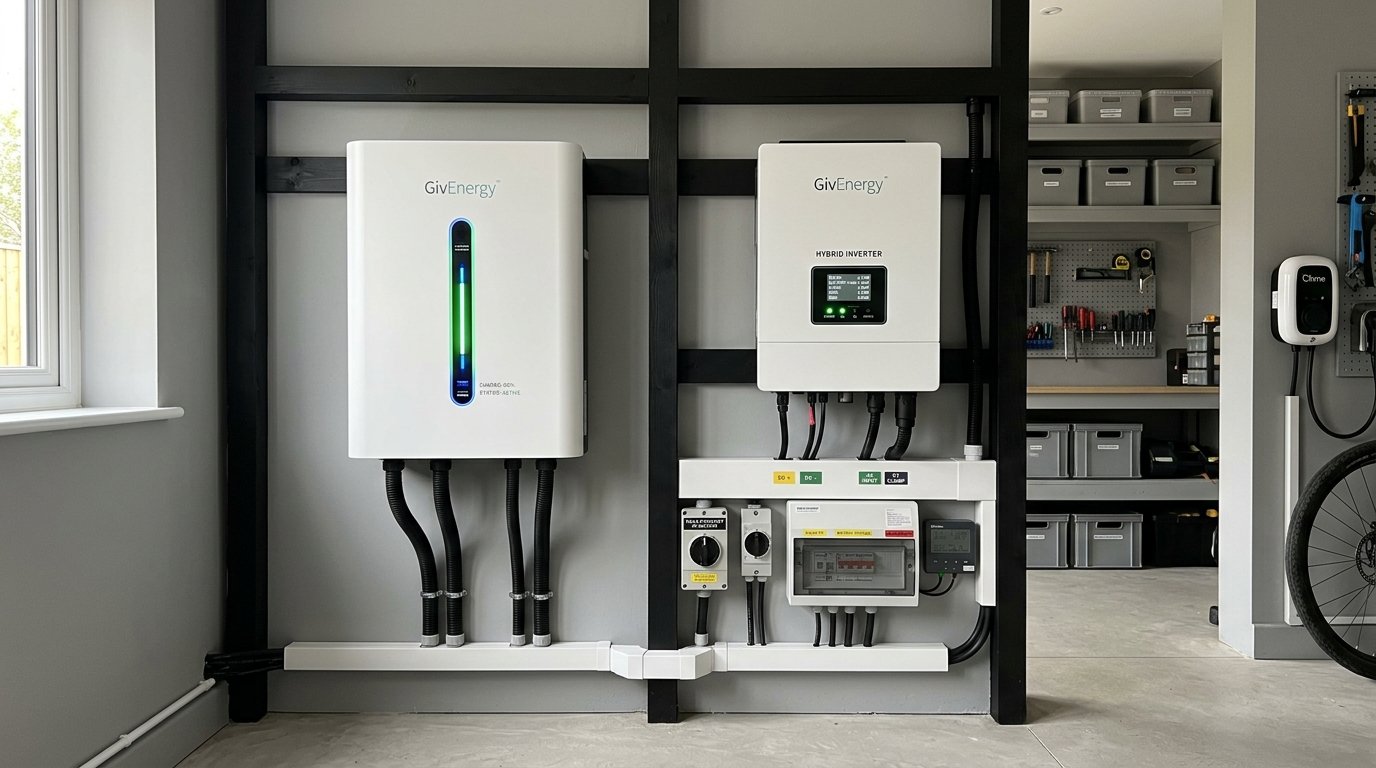
Does a solar battery need planning permission?
A battery installation is a separate element from rooftop solar and can raise its own planning and building considerations depending on size, location, enclosure and the property involved.
Many domestic battery installations are positioned in garages, utility areas or externally, but the installer should confirm suitability rather than assuming any location is acceptable.
If the battery forms part of a larger external structure or is proposed at a listed property, seek specific advice. Fire safety, electrical standards and manufacturer installation requirements also matter regardless of planning status.
Building regulations are separate from planning permission
Planning permission controls development and land use. Building regulations deal with standards such as structure, fire safety, energy performance and electrical work.
Solar panels add load to a roof and require electrical work. The installer should assess structural suitability and ensure the installation complies with applicable electrical and building requirements.
This distinction is important because a project can be permitted development from a planning perspective while still needing building-control compliance. Our guide on planning permission vs building regulations explains the two systems in more detail.
You may also need freeholder or landlord consent
Leaseholders should check the lease and obtain any required consent from the freeholder or management company. Renters need the property owner's permission.
Planning permission does not override property ownership rights or lease restrictions. Resolve these issues before paying deposits or booking scaffolding.
DNO notification or approval
Solar PV connects to the property's electrical installation and may export electricity to the distribution network. Your installer normally handles the required Distribution Network Operator process, which depends on the system size and connection arrangements.
This is not a planning application. It is part of the electrical and grid-connection process.
Ask the installer whether the project requires prior DNO approval or post-installation notification and retain the relevant documentation at handover.
Planning checks to carry out before ordering solar panels
Before committing to the installation:
- Confirm whether the property is listed.
- Check whether it is in a conservation area or other designated location.
- Review the exact proposed panel position and projection.
- Check flat-roof or ground-mounted rules where relevant.
- Contact the local planning authority if any condition is uncertain.
- Obtain landlord, freeholder or management-company consent if required.
- Confirm the installer will handle building and DNO requirements appropriately.
For complex sites, a lawful development certificate or formal planning advice may provide additional certainty before installation.
Avoid relying on outdated planning summaries
Solar planning rules have changed over time and can change again. Search results, forum comments and installer blogs may refer to older projection limits or previous permitted development rules.
Use current Planning Portal and local-authority guidance when the project is being designed. If you are in Scotland, Wales or Northern Ireland, check the rules specific to that nation rather than assuming the England position applies.
Planning the wider solar project
Once the planning route is clear, the installation still needs a roof survey, system sizing, electrical design, scaffolding and commissioning. Our guide to the solar panel installation process explains the typical steps.
Proper Trades coordinates solar energy projects across the Midlands and can arrange roofing or electrical work where the project requires more than one trade.
For further guidance, read our battery storage options.
Frequently asked questions
1. Do rooftop solar panels usually need planning permission in England?
Many domestic rooftop installations can be permitted development if they meet the relevant limits and conditions. Check current Planning Portal guidance and seek local planning advice if the property or installation is unusual.
2. Do solar panels need planning permission in a conservation area?
Not always, but additional restrictions and prior-approval requirements can apply depending on the location and panel position. Check with the local planning authority before installation.
3. Can I install solar panels on a listed building?
Potentially, but listed building consent and/or planning permission may be required. The impact on historic fabric and appearance needs specialist consideration, so obtain advice before ordering the system.
4. Do flat-roof solar panels need planning permission?
They can fall within permitted development in some circumstances, but specific height and designated-land conditions apply. Because frames can project above the roof, the exact design should be checked carefully.
5. Do ground-mounted solar panels have different rules?
Yes. Stand-alone arrays have their own permitted development limits for matters such as height, size, position and designated locations. A garden array should be checked separately from rooftop panels.
6. If planning permission is not required, is there anything else I need to do?
Yes. Roof structure, electrical safety, building regulations, DNO requirements, metering and any landlord or freeholder consent may still apply. Permitted development only addresses the planning route.
Need Professional Help with Your Project?
Proper Trades connects you with vetted, qualified trade specialists across the Midlands. Tell us your requirements, and we will review your project and present a single clear quote.
Enquiry Received
Thank you. We will review your project and get in touch shortly.